

Daily Bone Osseointegration Research Idea | Multienzymatic Heterojunction Reprograms the Diabetic Osseointegration Microenvironment
(1) Journal Source
Bioactive Materials (2026).
(2) Title
Multienzymatic Heterojunction Reprograms the Diabetic Osseointegration Microenvironment.
(3) Research Approach
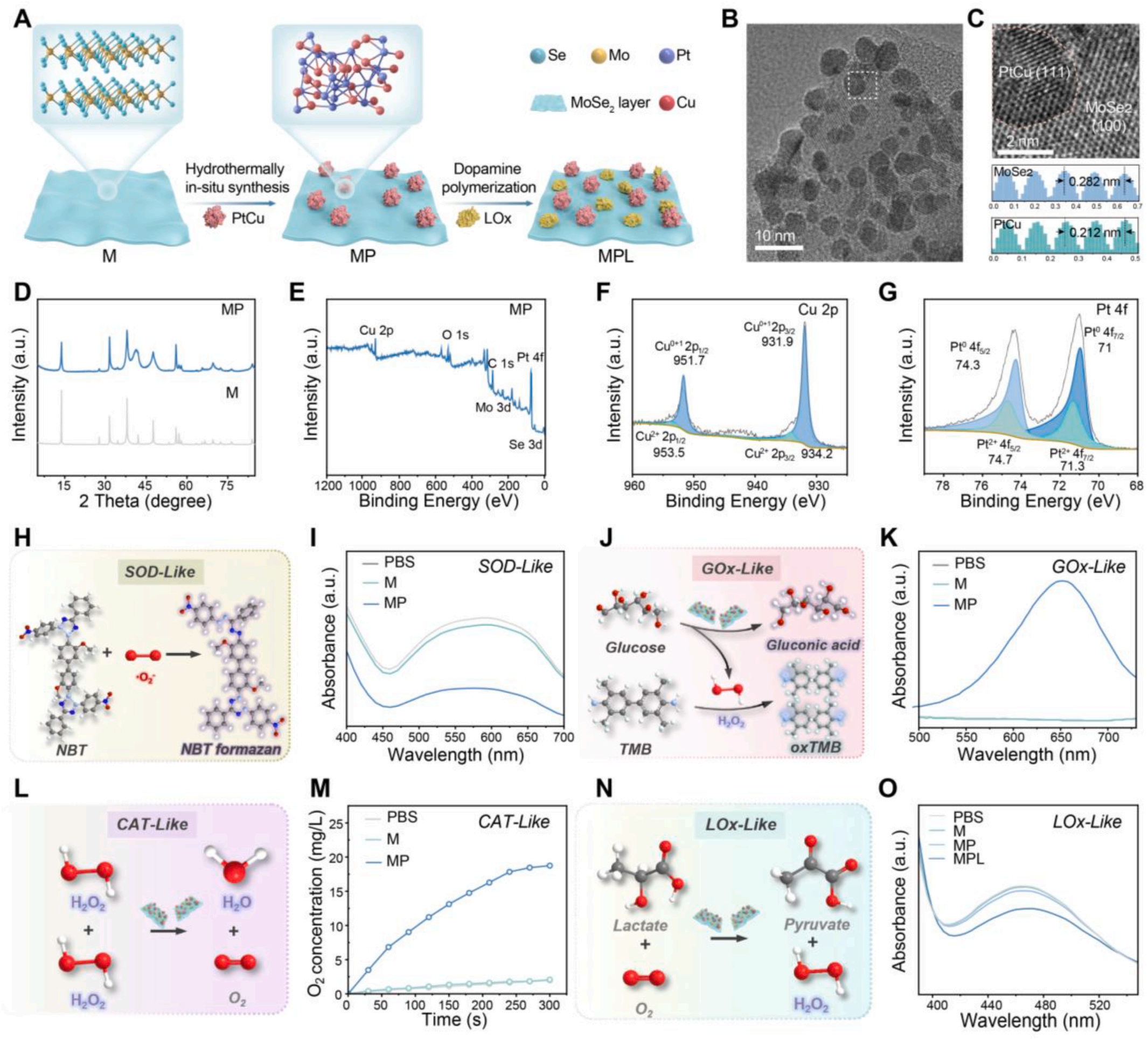
The study targets extracellular metabolic disorder and intracellular mitochondrial dysfunction in infected diabetic bone defects by constructing a MoSe₂/PtCu@LOx multienzymatic hybrid bio-heterojunction. Under near-infrared light, the material exerts photothermal/photodynamic antibacterial effects; PtCu mimics glucose oxidase-, superoxide dismutase-, and catalase-like activities to remove glucose and reactive oxygen species; lactate oxidase consumes lactate and generates pyruvate, alleviating acidosis and supplying metabolic substrate. Released selenium activates SIRT3, upregulates Gpx1, stabilizes Mfn2, promotes PINK1/Parkin-mediated mitophagy, restores oxidative phosphorylation and ATP production, and thereby improves osteogenic differentiation and bone defect repair.
(4) Innovation
The work couples extracellular metabolic remodeling with intracellular mitochondrial quality control in a closed loop: the multienzymatic cascade clears reactive oxygen species, eliminates lactate, and supplies oxygen; selenium-responsive release connects the SIRT3–Gpx1–Mfn2 axis, highlighting Gpx1 as a molecular scaffold that stabilizes Mfn2 and restores mitophagic flux; lactate is converted into a tricarboxylic acid cycle substrate, allowing metabolic waste to support bioenergetic recovery. This strategy simultaneously addresses infection, oxidative stress, acidosis, and energy metabolism rather than relying on a single antibacterial or antioxidant pathway.
(5) Material Development
Few-layer MoSe₂ nanosheets are prepared by liquid-phase exfoliation, PtCu alloy nanoparticles are grown in situ to form a Schottky heterojunction, and lactate oxidase is immobilized with polydopamine to obtain MoSe₂/PtCu@LOx. The material shows multiple enzyme-like activities, near-infrared photothermal/photodynamic effects, and pathological microenvironment-responsive selenium release; an Alg–PVA–PBA hydrogel serves as a carrier for in vivo evaluation in a diabetic infected calvarial defect model.
We provide full-process services for various material designs (including highly innovative scheme design, preparation, characterization, in vitro and in vivo validation (cell/animal experiments), etc.): a postdoctoral team (with multiple high-impact publications in Zone 1 journals) can meet all kinds of tricky and challenging requirements, including hydrogels / drug delivery / nanomaterials / polymers / liposomes / microneedle drug delivery, etc. We can assist with project design / NSFC grant applications / publication of high-impact Zone 1 and Zone 2 papers in journals such as AFM, SCI, AM, etc. Welcome to consult 👇️
17768014569 (Senior Engineer Gao)
17761925168 (Engineer Zhang)
18013729810 (Engineer Yang)
#MultienzymaticHeterojunction #DiabeticBoneDefect #Mitophagy #Selenoprotein #Osseointegration
18915694570
Previous: Custom‑Tailored
Next: Custom Nanomaterial Se


