

Daily Ophthalmology Research Idea | Mitochondrial Transplantation: An Emerging Strategy for Ocular Diseases

(1) Abstract
Mitochondrial transplantation is a research strategy that supplements healthy mitochondria to metabolically dysfunctional cells or tissues. Ocular tissues have high metabolic demands, and mitochondrial damage contributes to corneal, optic nerve, and retinal diseases. This review summarizes ocular mitochondrial biology, disease mechanisms, existing mitochondria-targeted interventions, and evidence for mitochondrial transplantation, while discussing isolation, sources, delivery, quality control, efficacy assessment, and challenges.
(2) Background
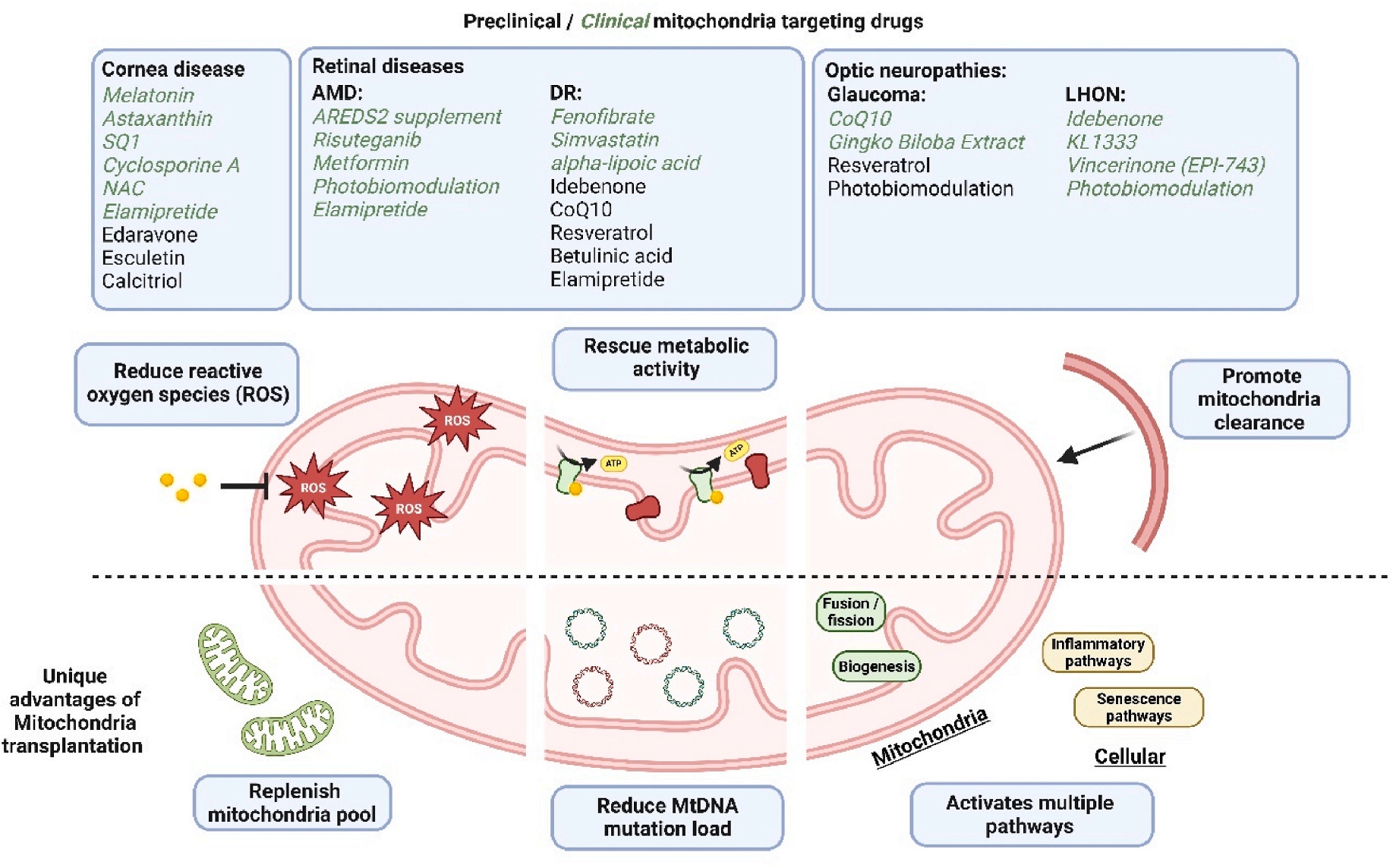
Retinal ganglion cells, retinal pigment epithelium, photoreceptors, and corneal tissues rely on oxidative phosphorylation and are sensitive to mitochondrial injury. Primary or secondary mitochondrial dysfunction can cause oxidative stress, mtDNA damage, and bioenergetic failure. Existing targeted strategies mainly alleviate oxidative stress but cannot fully restore mitochondrial integrity, so healthy mitochondrial supplementation has attracted attention.
(3) Main Content
The review covers mitochondrial structure and function, differences in mitochondrial distribution across ocular tissues, mitochondrial mechanisms in corneal, optic nerve, and retinal diseases, existing mitochondria-targeted drugs and photobiomodulation, as well as contact-dependent and contact-independent mitochondrial transplantation, isolation methods, donor sources, ocular delivery, efficacy in experimental models, biomarkers, and future challenges.
(4) Study Design
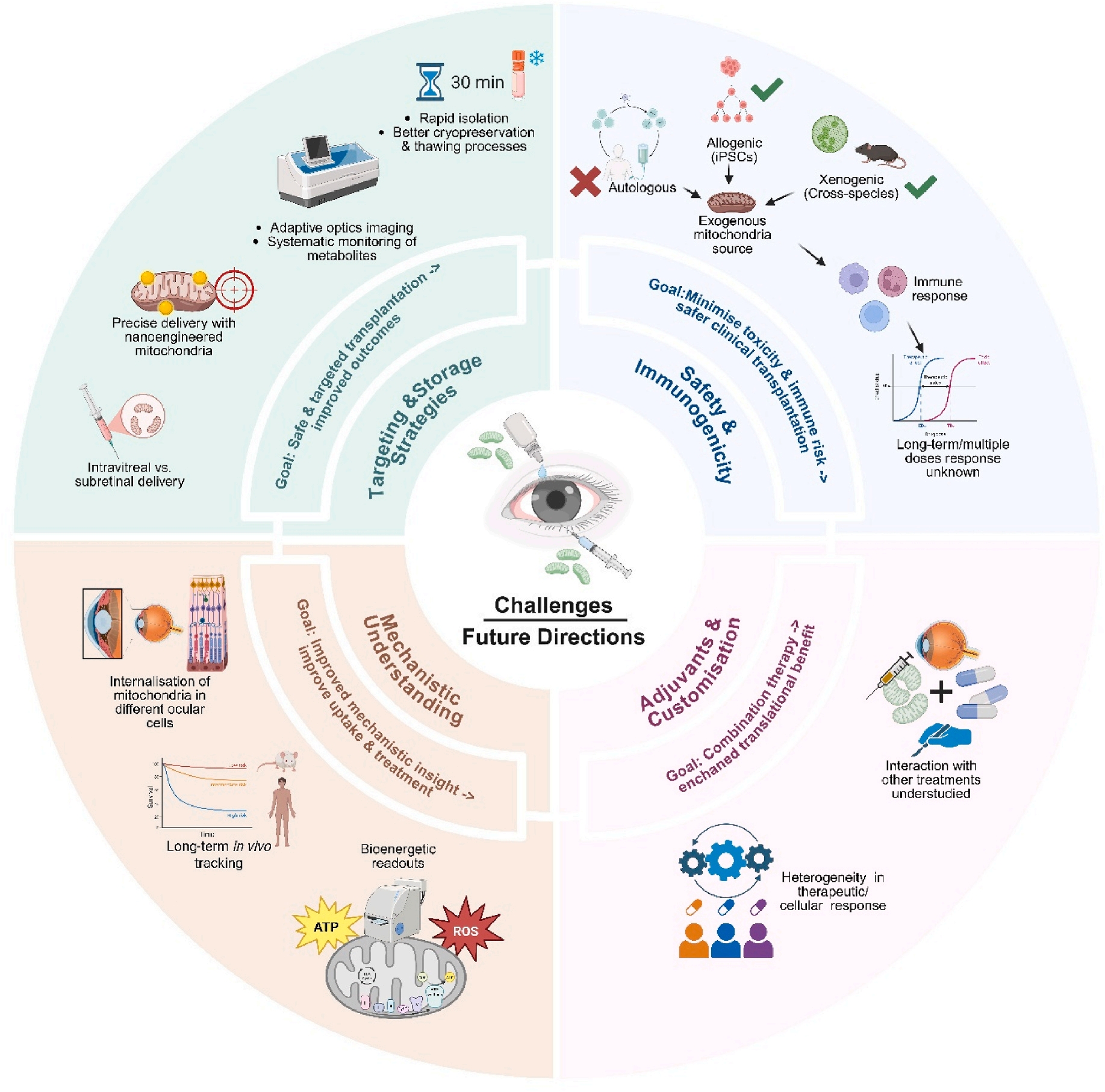
This is a narrative review integrating basic and experimental model evidence on ocular mitochondrial dysfunction. It compares contact-dependent routes, such as tunneling nanotubes and mesenchymal stem cell co-culture, with contact-independent routes, such as isolated mitochondria delivered by eye drops or intravitreal injection, and summarizes isolation, purification, quality control, and functional assessment.
(5) Results
Experimental evidence shows that mitochondrial transplantation promotes epithelial repair in corneal injury models; improves bioenergetics and supports axonal regeneration in optic nerve injury and retinal ganglion cell models; improves complex I, ATP, retinal morphology, and visual behavior in LHON models; and reduces ROS while improving membrane potential, ATP, and barrier proteins in AMD retinal pigment epithelium models. Direct evidence in DR is limited, but mechanisms support further exploration.
(6) Future Directions
Future work should advance standardized isolation and quality control, donor–recipient metabolic matching, targeted delivery, dosing and repeated administration, immune response and long-term fate tracking, and clarify endocytosis/phagocytosis, mitophagy, and biogenesis mechanisms, combining multimodal biomarkers and evaluation with existing therapies.
We provide full-process services for various material designs (including highly innovative scheme design, preparation, characterization, in vitro and in vivo validation (cell/animal experiments), etc.): a postdoctoral team (with multiple high-impact publications in Zone 1 journals) can meet all kinds of tricky and challenging requirements, including hydrogels / drug delivery / nanomaterials / polymers / liposomes / microneedle drug delivery, etc. We can assist with project design / NSFC grant applications / publication of high-impact Zone 1 and Zone 2 papers in journals such as AFM, SCI, AM, etc. Welcome to consult 👇️
17768014569 (Senior Engineer Gao)
17761925168 (Engineer Zhang)
18013729810 (Engineer Yang)
18915694570
Previous: Custom Nanomaterial Se
Next: Custom Nanomaterial Se


