

Daily Bone Regeneration Idea: Piezoelectric Scaffold for Staged miR-126 Delivery
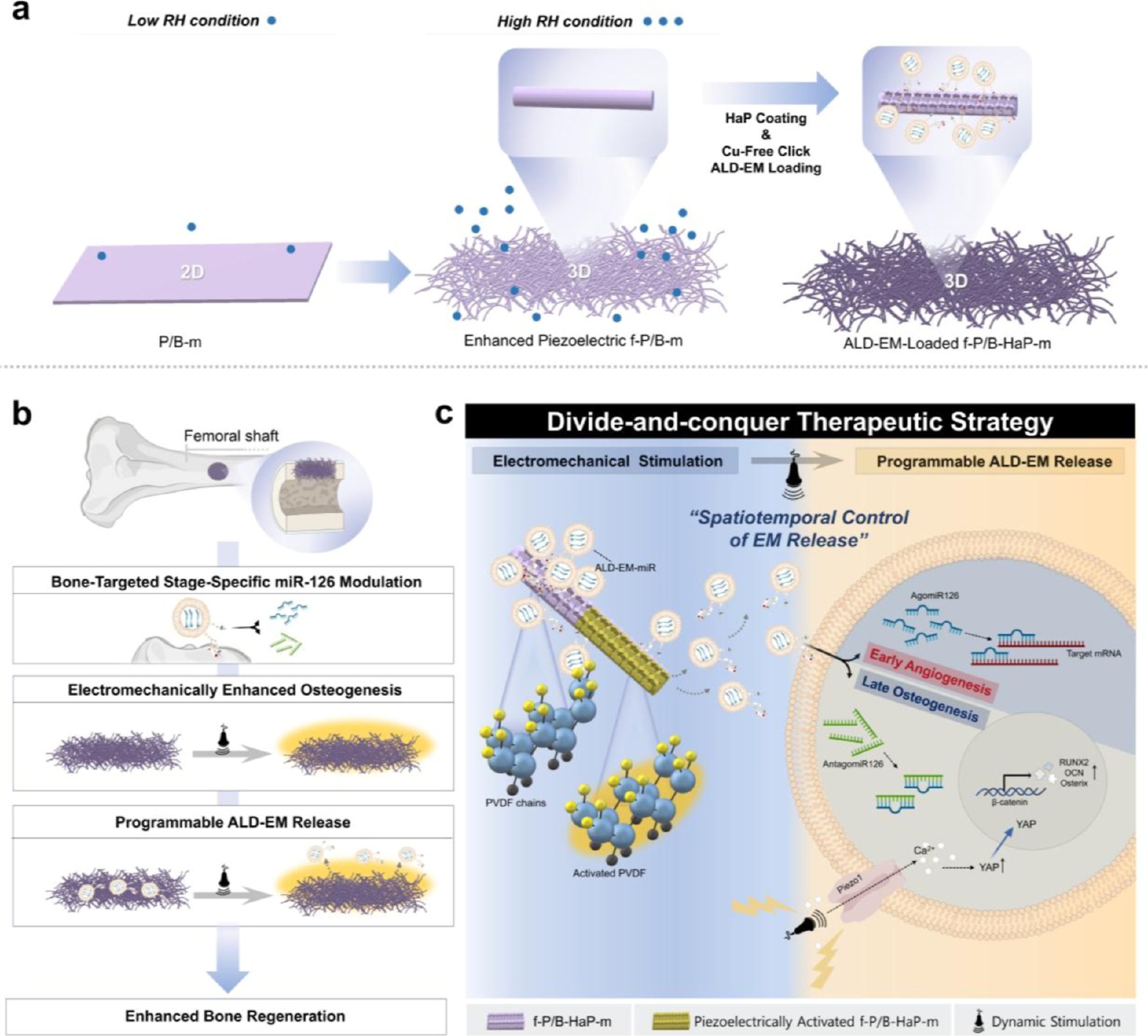
(1) Abstract: This study develops a multifunctional piezoelectric nanofiber scaffold for mechanically triggered, temporally controlled delivery of bone-targeted exosome mimetics loaded with AgomiR-126 or AntagomiR-126. Under physiological loading, the scaffold generates electromechanical activation, coupling mechanical cues with therapeutic release. Alendronate modification enables bone-selective localization, and the functional divergence of miR-126 coordinates early angiogenesis with late osteogenic differentiation to improve bone repair.
(2) Background: Bone regeneration requires stage-specific biochemical cues and biomechanical stimulation, but current scaffolds largely rely on passive release and fail to adapt to dynamic healing phases. Piezoelectric materials convert mechanical stimuli into bioelectrical signals, yet previous studies mainly focused on piezoelectric output or osteoconductivity rather than dynamic regulation of therapeutic activity. miR-126 promotes angiogenesis while suppressing osteogenic differentiation, making its temporal control a key delivery design issue.
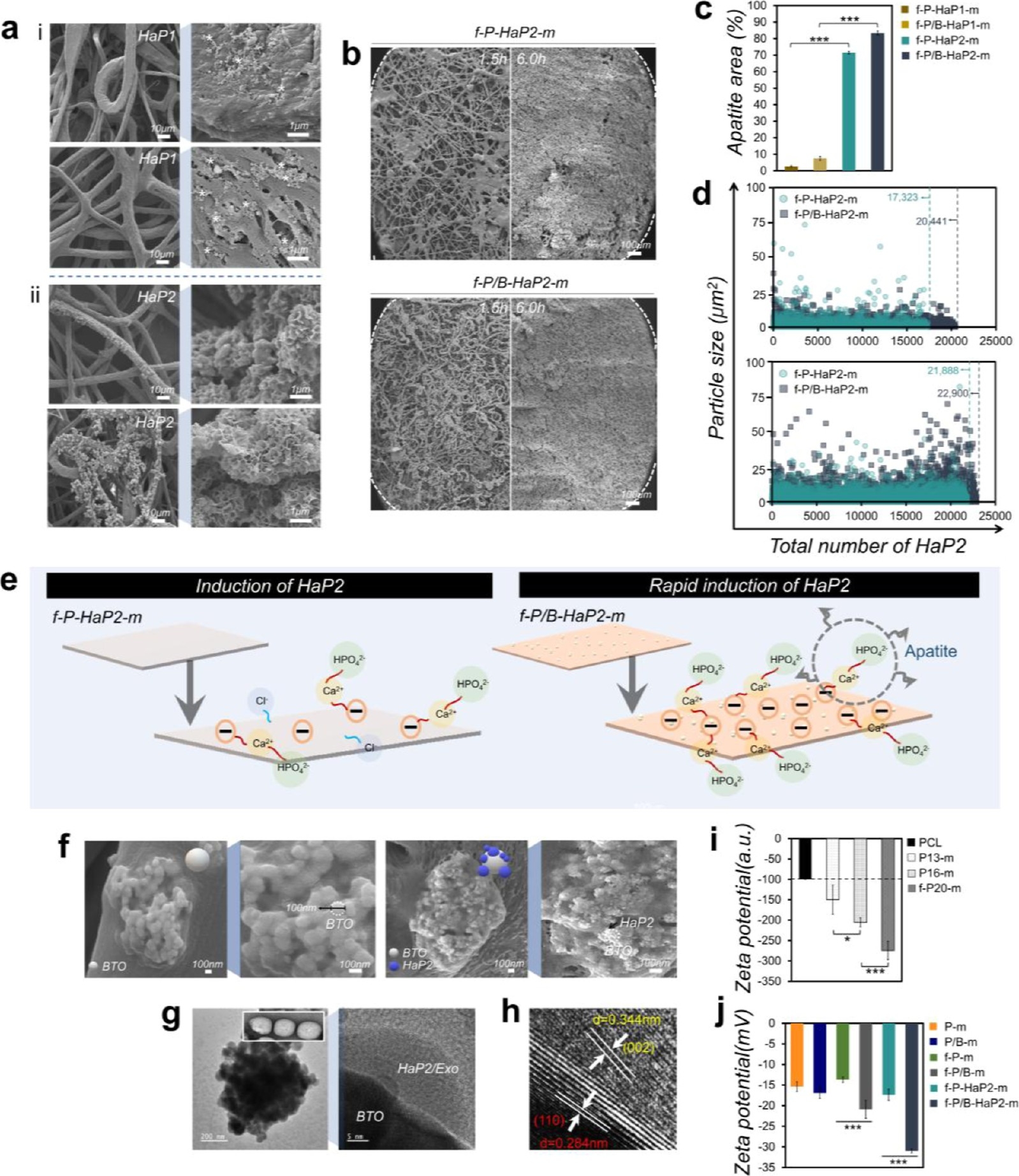
(3) Main Content: A high β-phase, fluffy three-dimensional PVDF piezoelectric scaffold was prepared with piezoelectric and conductive nanofillers to enhance piezoelectric response and surface charge, and a hydroxyapatite coating to promote mineralization and exosome mimetic immobilization. Alendronate-modified exosome mimetics were prepared by bioorthogonal chemistry and loaded with AgomiR-126 or AntagomiR-126. Mechanical stimulation promoted frequency-dependent release of carriers and miRNAs; early release of AgomiR-126 supported angiogenesis and progenitor recruitment, while late release of AntagomiR-126 promoted osteogenic differentiation and matrix mineralization.
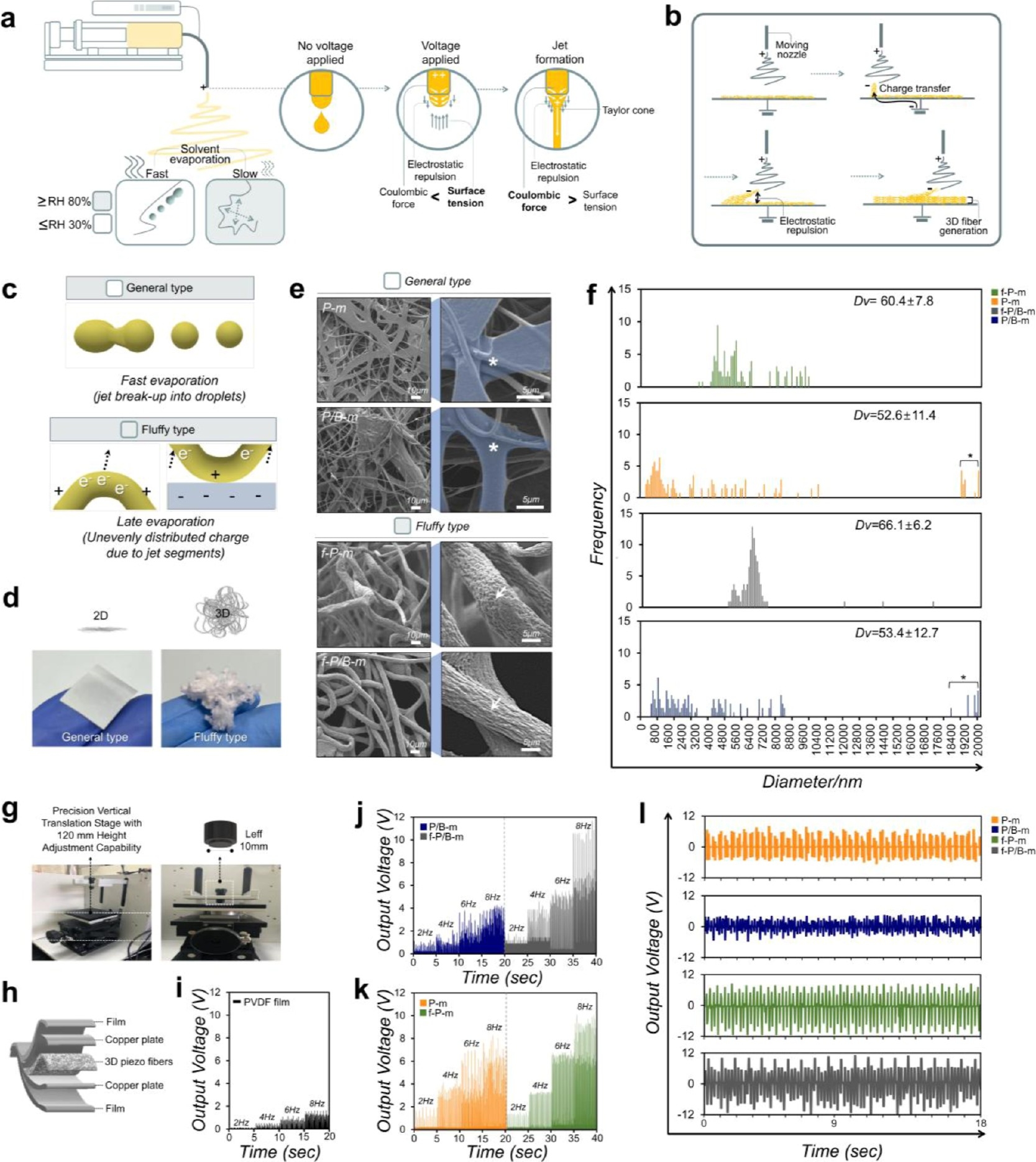
(4) Study Design: Two-dimensional and fluffy three-dimensional scaffolds were fabricated by humidity-controlled electrospinning. Morphology, crystalline phase, surface chemistry, mineralization, piezoelectric output, and surface potential were characterized. Hydroxyapatite coating and exosome mimetic immobilization were optimized. Human mesenchymal stem cells were used to assess infiltration, viability, uptake, angiogenic and osteogenic markers, and mechanotransduction. A rat femoral defect model was used with micro-computed tomography, vascular perfusion imaging, histology, immunohistochemistry, and double immunofluorescence.
(5) Results: The fluffy three-dimensional scaffold showed stable piezoelectric output, and the nanofillers promoted β-phase formation and apatite deposition. Alendronate modification enhanced retention of exosome mimetics on bone matrix and bone-targeted distribution. AgomiR-126 upregulated angiogenic markers and suppressed osteogenic markers, whereas AntagomiR-126 upregulated osteogenic markers. Mechanical stimulation enhanced carrier and miRNA release and activated YAP/RUNX2-related mechanotransduction. In vivo, early stimulation favored vascularization, while late stimulation favored bone bridging and matrix maturation.
(6) Future Directions: Further validation in larger animals and more complex bone defects is needed, together with analysis of other mechanosensitive pathways and bioelectric mechanisms. Long-term persistence of non-degradable scaffolds should be evaluated, and degradable or hybrid piezoelectric systems may be developed. Multiphase degradable composite scaffolds could enable programmed sequential release of angiogenic and osteogenic signals, integrating mechanical gating with temporally controlled molecular regulation into a functionally coupled therapeutic system.
We provide full-process services for various material designs (including highly innovative scheme design, preparation, characterization, in vitro and in vivo validation (cell/animal experiments), etc.): a postdoctoral team (with multiple high-impact publications in Zone 1 journals) can meet all kinds of tricky and challenging requirements, including hydrogels / drug delivery / nanomaterials / polymers / liposomes / microneedle drug delivery, etc. We can assist with project design / NSFC grant applications / publication of high-impact Zone 1 and Zone 2 papers in journals such as AFM, SCI, AM, etc. Welcome to consult 👇️
17768014569 (Senior Engineer Gao)
17761925168 (Engineer Zhang)
18013729810 (Engineer Yang)
18915694570
Previous: Custom Nanomaterial Se
Next: Custom Nanomaterial Se


