

Daily Fundus Delivery Idea: Blood-Retinal Barrier Gateway Framework

(1) Abstract:
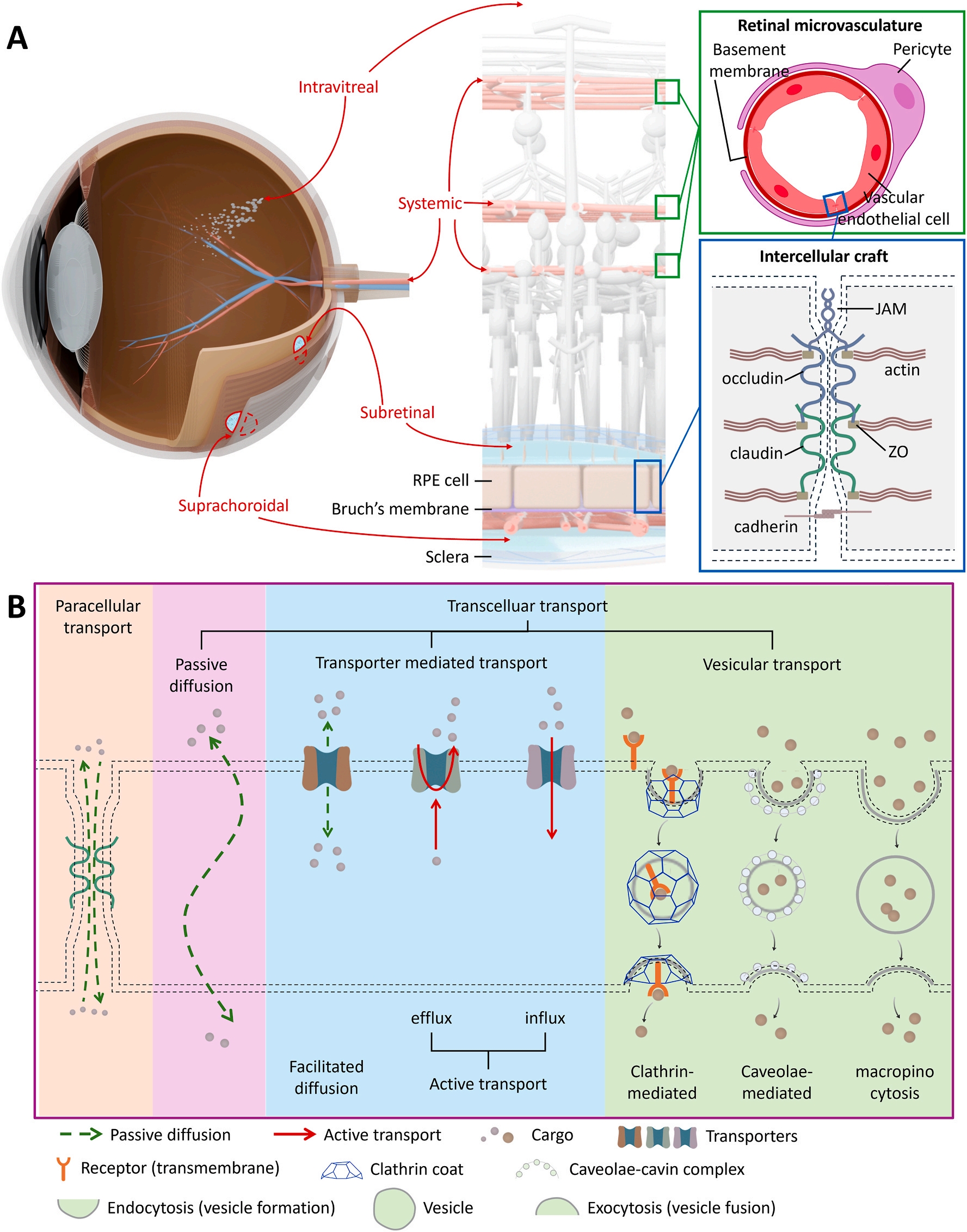
This review proposes a shift from a barrier-centric view to a biological gateway framework, treating the inner and outer blood-retinal barriers as dynamic interfaces that actively regulate therapeutic entry, distribution, and clearance. It integrates paracellular restriction, transcellular transport, receptor-mediated trafficking, and disease-associated remodeling, and discusses how delivery routes and platforms can be matched to target tissue, exposure needs, and safety.
(2) Background:
Treatment of posterior-segment retinal diseases depends not only on drug potency but also on achieving sufficient and durable exposure at target tissues. Delivery challenges have traditionally been attributed mainly to the restrictive nature of the blood-retinal barrier, but this barrier also participates in active transport, clearance, and disease-adaptive changes; bypassing the barrier alone is insufficient to guide delivery system design.
(3) Main Content:
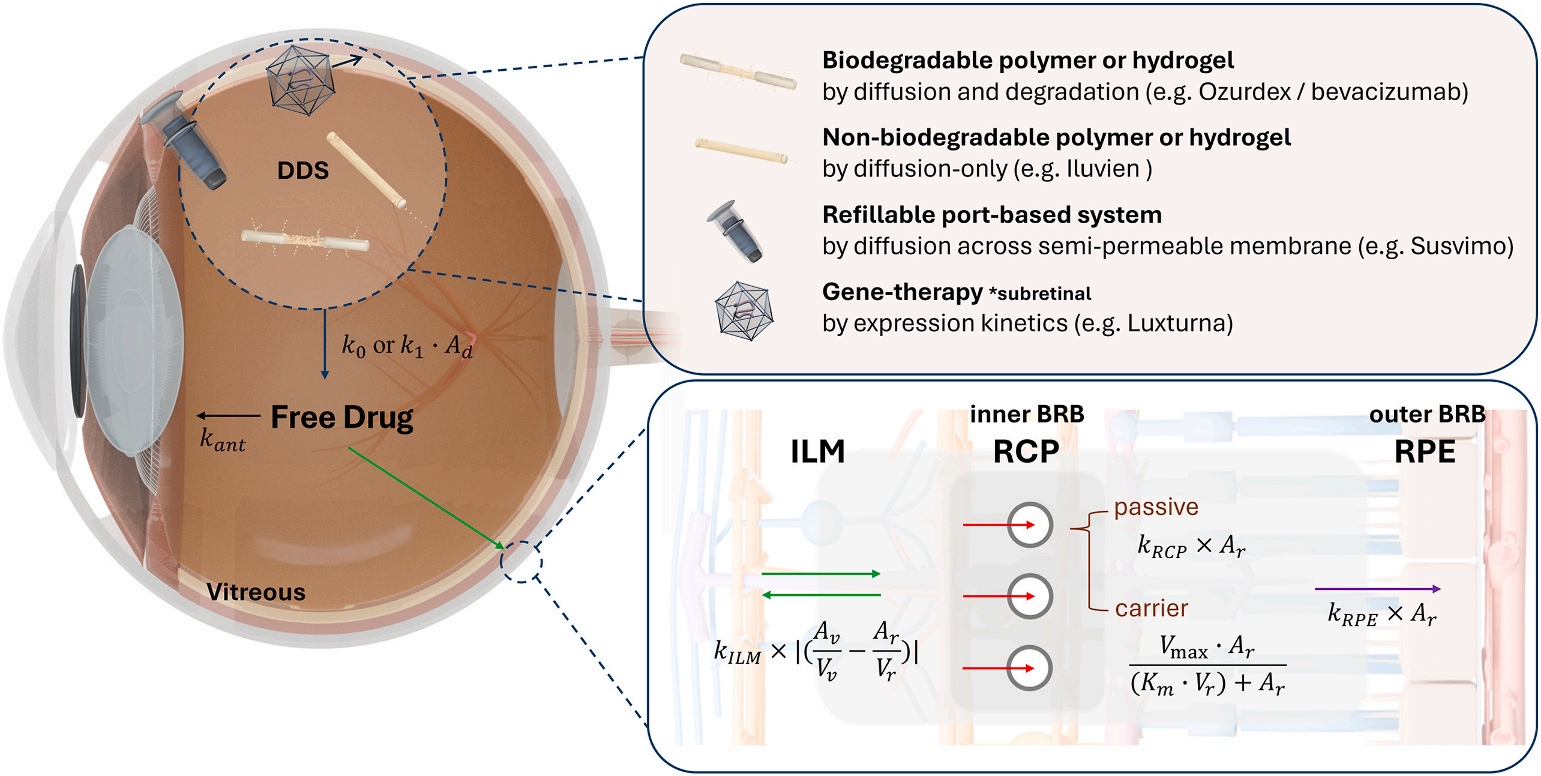
The review first analyzes the structure and transport mechanisms of the inner and outer blood-retinal barriers, including tight junctions, transporters, efflux pumps, and vesicular transport. It then compares the interfaces and limitations of systemic, intravitreal, suprachoroidal, and subretinal administration. It further categorizes sustained-release implants, refillable ports, gene therapy, hydrogels, polymeric and lipid carriers, biomimetic systems, inorganic and hybrid nanomaterials, and stimuli-responsive platforms by function, and discusses pharmacokinetic modeling and evaluation methods.
(4) Study Design:
This is a narrative review. The authors integrate blood-retinal barrier biology, administration routes, material and chemical design, pharmacokinetic models, exposure assessment, and translational constraints, organizing evidence along a "barrier interface–engineering bottleneck–gateway strategy" logic and distinguishing clinically established, clinically investigated, and preclinical exploratory platforms.
(5) Results:
The review indicates that the inner and outer blood-retinal barriers differ in tight junction composition, transporter polarity, and disease remodeling direction, determining the main bottlenecks of different routes. Sustained release and gene expression can prolong exposure, receptor-mediated transport and efflux modulation can improve interface crossing, and stimuli-responsive systems can add spatiotemporal control. However, delivery enhancement must be evaluated together with reversibility, tissue tolerability, and manufacturability, and pharmacokinetic models and imaging quantification help distinguish local retention from target exposure.
(6) Future Directions:
Future work should incorporate barrier status into route and carrier selection and establish evaluation systems that distinguish entry, retention, target-interface contact, and functional exposure. Combining imaging, pharmacokinetic modeling, and cell-specific readouts may support disease-stage-matched gateway strategies, with delivery system complexity optimized under constraints of safety, reversibility, and manufacturability.
We provide full-process services for various material designs (including highly innovative scheme design, preparation, characterization, in vitro and in vivo validation (cell/animal experiments), etc.): a postdoctoral team (with multiple high-impact publications in Zone 1 journals) can meet all kinds of tricky and challenging requirements, including hydrogels / drug delivery / nanomaterials / polymers / liposomes / microneedle drug delivery, etc. We can assist with project design / NSFC grant applications / publication of high-impact Zone 1 and Zone 2 papers in journals such as AFM, SCI, AM, etc. Welcome to consult 👇️
17768014569 (Senior Engineer Gao)
17761925168 (Engineer Zhang)
18013729810 (Engineer Yang)
18915694570
Previous: Daily Osteoimmunology
Next: Custom Nanomaterial Se


