

Daily Osteoimmunology Idea: Zr-MOF for Periapical Bone Regeneration
(1) Abstract:
This study evaluates an intrinsically bioactive hierarchical mesoporous Zr-MOF nanoplatform, HMUiO-66-NH2, as a localized host-modulatory strategy for apical periodontitis by modulating the osteoimmune-redox microenvironment. The material shows cytocompatibility, cellular internalization, and local retention, and is associated with reduced reactive oxygen species, preserved osteogenic capacity of bone marrow mesenchymal stem cells, and a shift toward reparative macrophage phenotypes.
(2) Background:
Apical periodontitis is an infection-driven inflammatory bone disease. Root canal treatment controls infection, but immune dysregulation, oxidative stress, and impaired bone healing can persistently limit periapical repair. Macrophage polarization is tightly coupled to redox status, making local modulation of macrophages and the osteoimmune-redox network a rational direction for improving repair.
(3) Main Content:
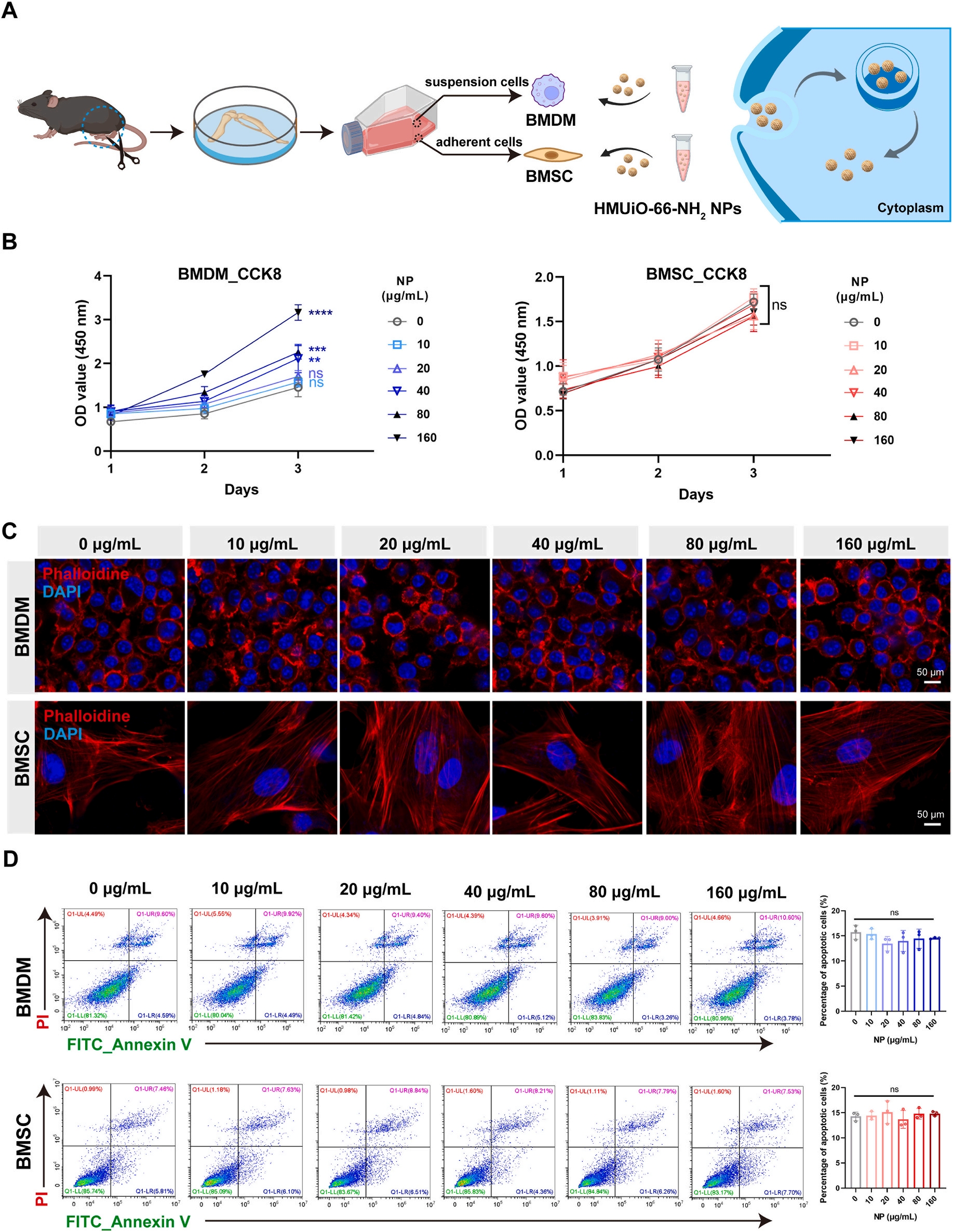
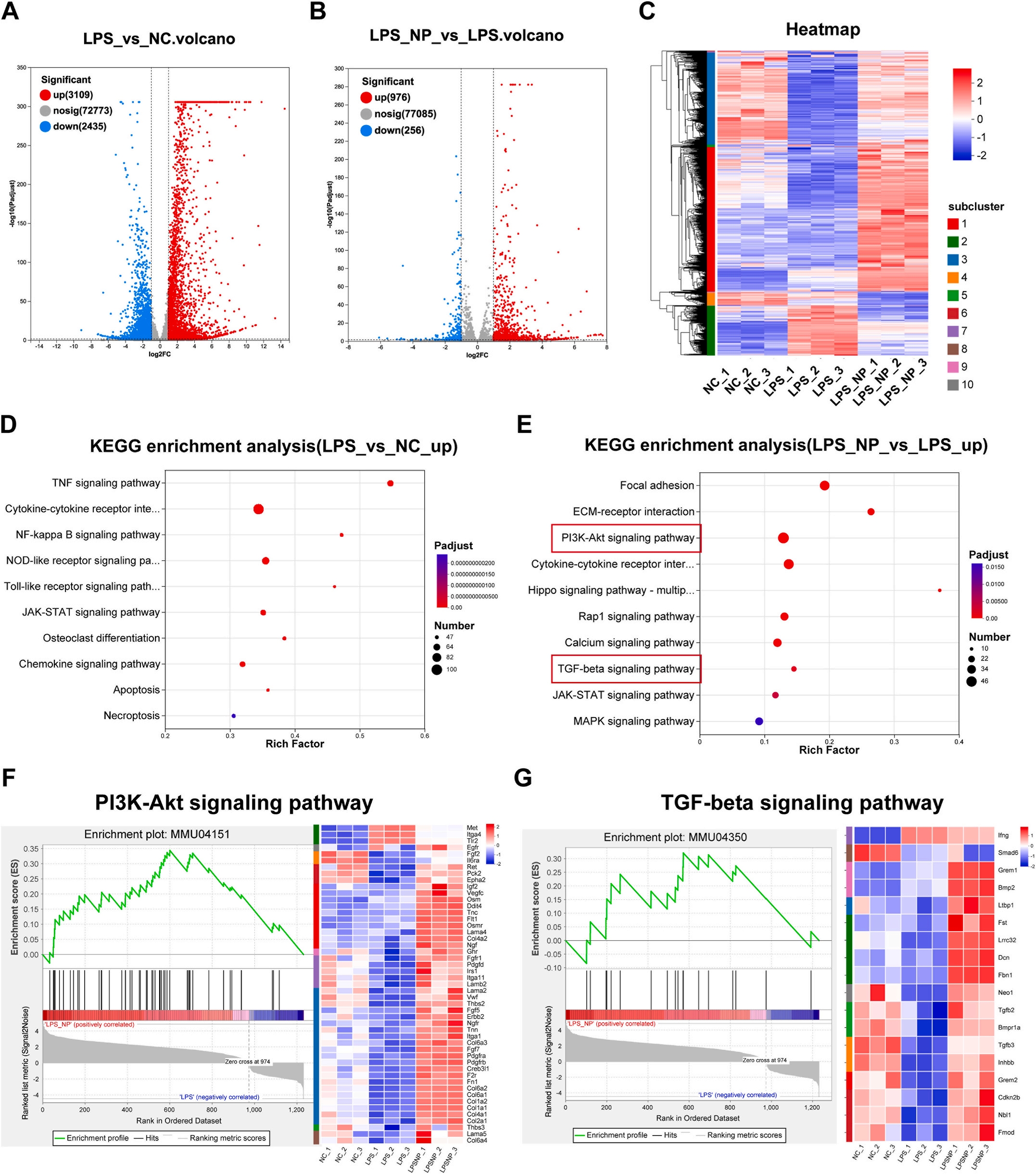
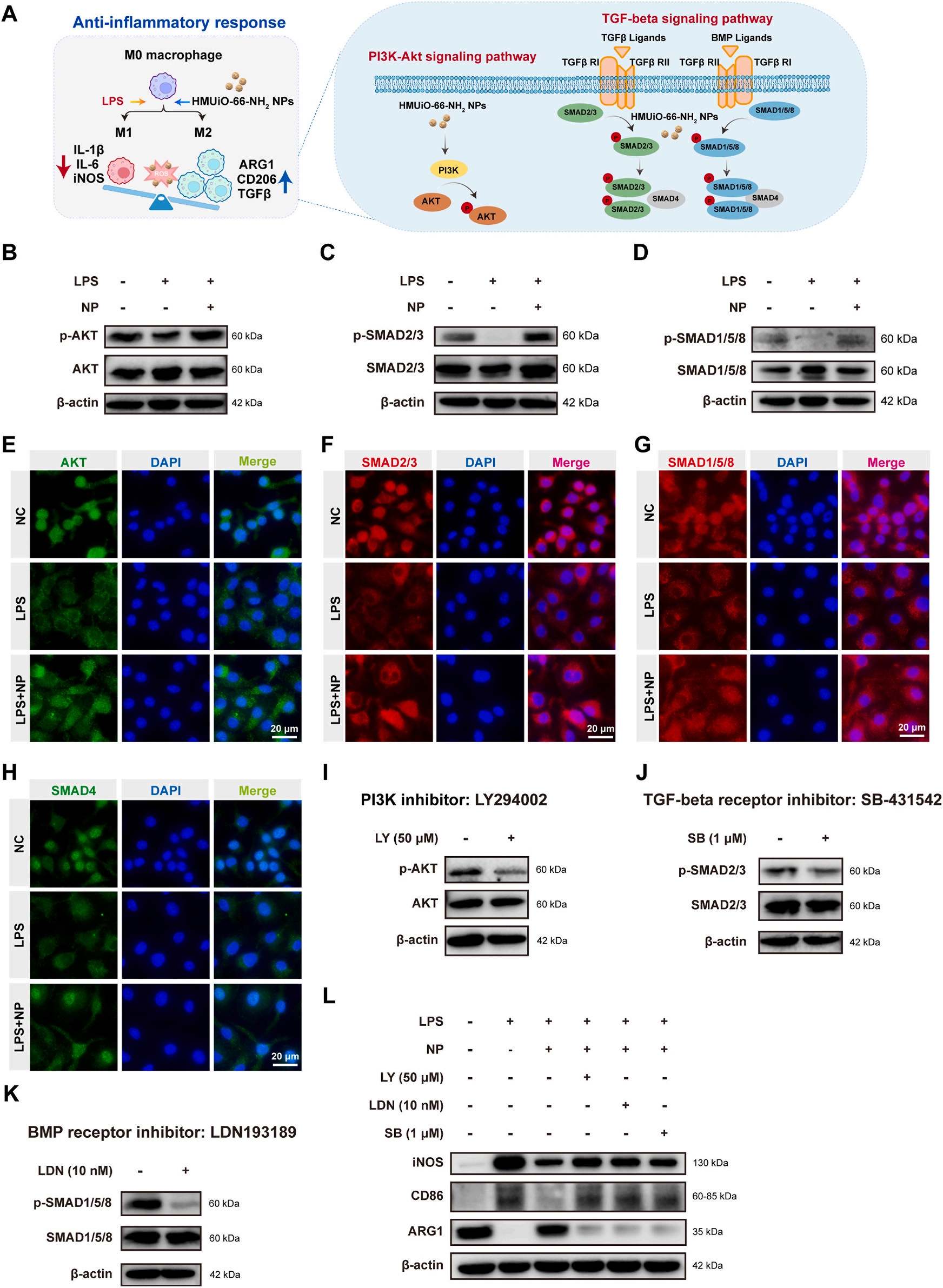
The study addresses physicochemical characterization, biocompatibility, cellular uptake, reactive oxygen species scavenging, macrophage polarization, osteogenesis of bone marrow mesenchymal stem cells, conditioned medium effects, local retention, and bone repair in vivo. Transcriptomic, protein-level, and inhibitor analyses are used to explore the involvement of PI3K-Akt and TGF-β signaling.
(4) Study Design:
In vitro, bone marrow-derived macrophages and bone marrow mesenchymal stem cells were used to evaluate inflammation, oxidative stress, polarization, and osteogenesis under LPS stimulation. Macrophage-conditioned medium was prepared to assess indirect osteogenic effects. In vivo, a rat apical periodontitis model was established with local administration after root canal preparation, followed by micro-CT, histology, immunofluorescence, TRAP staining, and transcriptomic analysis.
(5) Results:
HMUiO-66-NH2 reduced reactive oxygen species and pro-inflammatory factors in inflammatory cells, promoted a reparative macrophage phenotype, and preserved osteogenic differentiation of bone marrow mesenchymal stem cells under inflammatory stress. In vivo local administration was associated with reduced periapical bone destruction, fewer TRAP-positive osteoclasts, enhanced bone repair, and reparative macrophage responses. PI3K-Akt and TGF-β were identified as candidate involved pathways, and preliminary biosafety evaluation showed no obvious abnormalities.
(6) Future Directions:
Further work should clarify the causal hierarchy and relative contributions of the signaling pathways, evaluate material degradation, retention, and long-term biocompatibility, and validate applicability in complex infectious microenvironments and different lesion stages, with systematic comparison with other host-modulatory strategies.
We provide full-process services for various material designs (including highly innovative scheme design, preparation, characterization, in vitro and in vivo validation (cell/animal experiments), etc.): a postdoctoral team (with multiple high-impact publications in Zone 1 journals) can meet all kinds of tricky and challenging requirements, including hydrogels / drug delivery / nanomaterials / polymers / liposomes / microneedle drug delivery, etc. We can assist with project design / NSFC grant applications / publication of high-impact Zone 1 and Zone 2 papers in journals such as AFM, SCI, AM, etc. Welcome to consult 👇️
17768014569 (Senior Engineer Gao)
17761925168 (Engineer Zhang)
18013729810 (Engineer Yang)
18915694570
Previous: Nanomaterial Customiza
Next: Custom Nanomaterial Se


