

One Orthopedic Idea a Day |Lactate-Epigenetic Axis Against Ossification

(1) Abstract: This study reveals a chondrocyte glycolysis–lactate–P300–H3K18la epigenetic axis in traumatic heterotopic ossification and develops a biomimetic adhesive hydrogel, GelHA-A485@Exos, which locally delivers a P300 inhibitor via MSC-derived exosomes to suppress osteogenic activation of tendon-derived mesenchymal stem cells while promoting tendon repair.
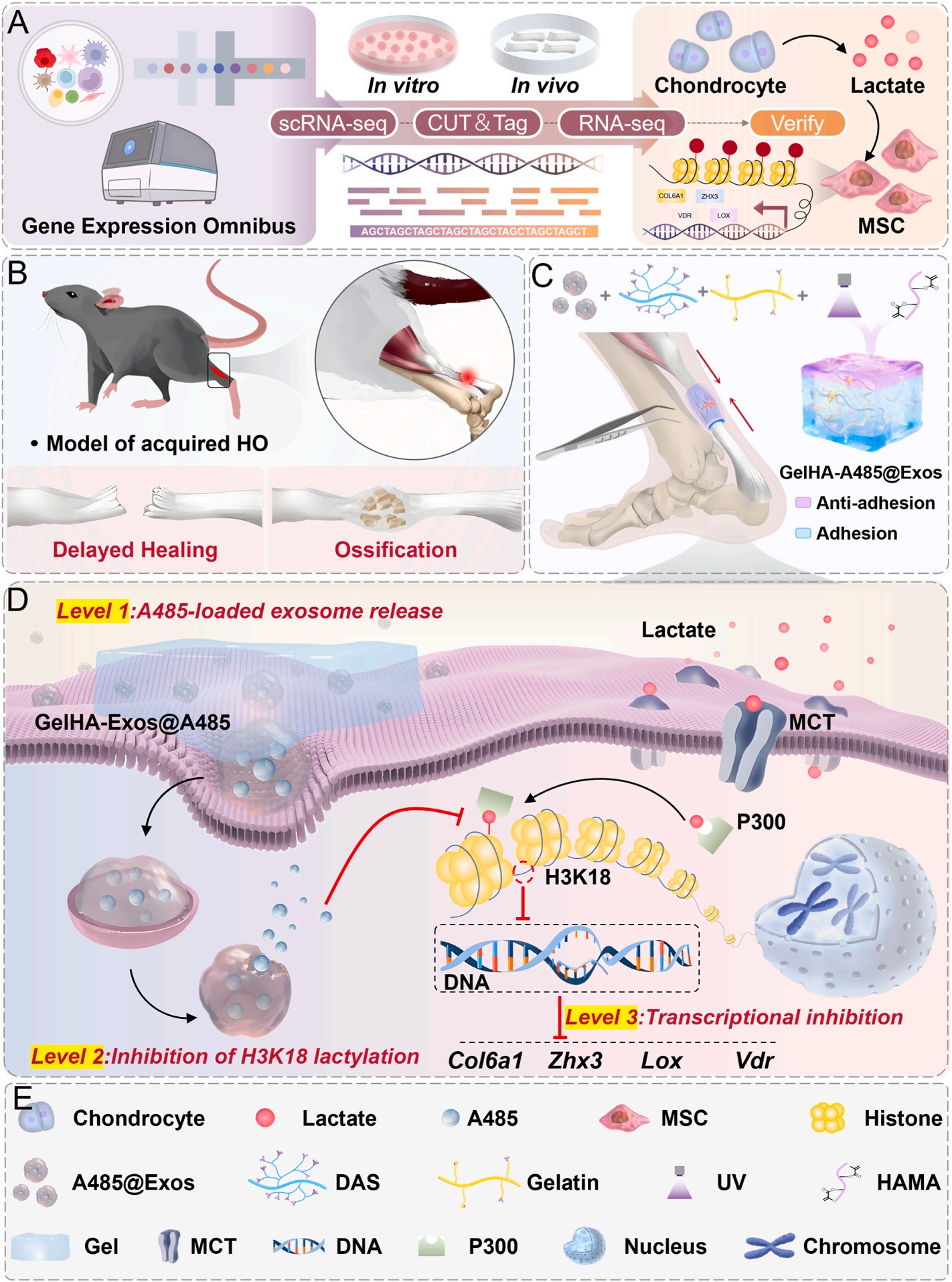
(2) Background: Traumatic heterotopic ossification is an abnormal endochondral ossification process after tendon injury, with early cartilage nidus formation as a key node. Local hypoxia can drive glycolysis and lactate accumulation, but how lactate links metabolism to osteogenic fate remains unclear. Directly inhibiting lactate production may also affect cartilage template clearance, requiring a downstream epigenetic target.
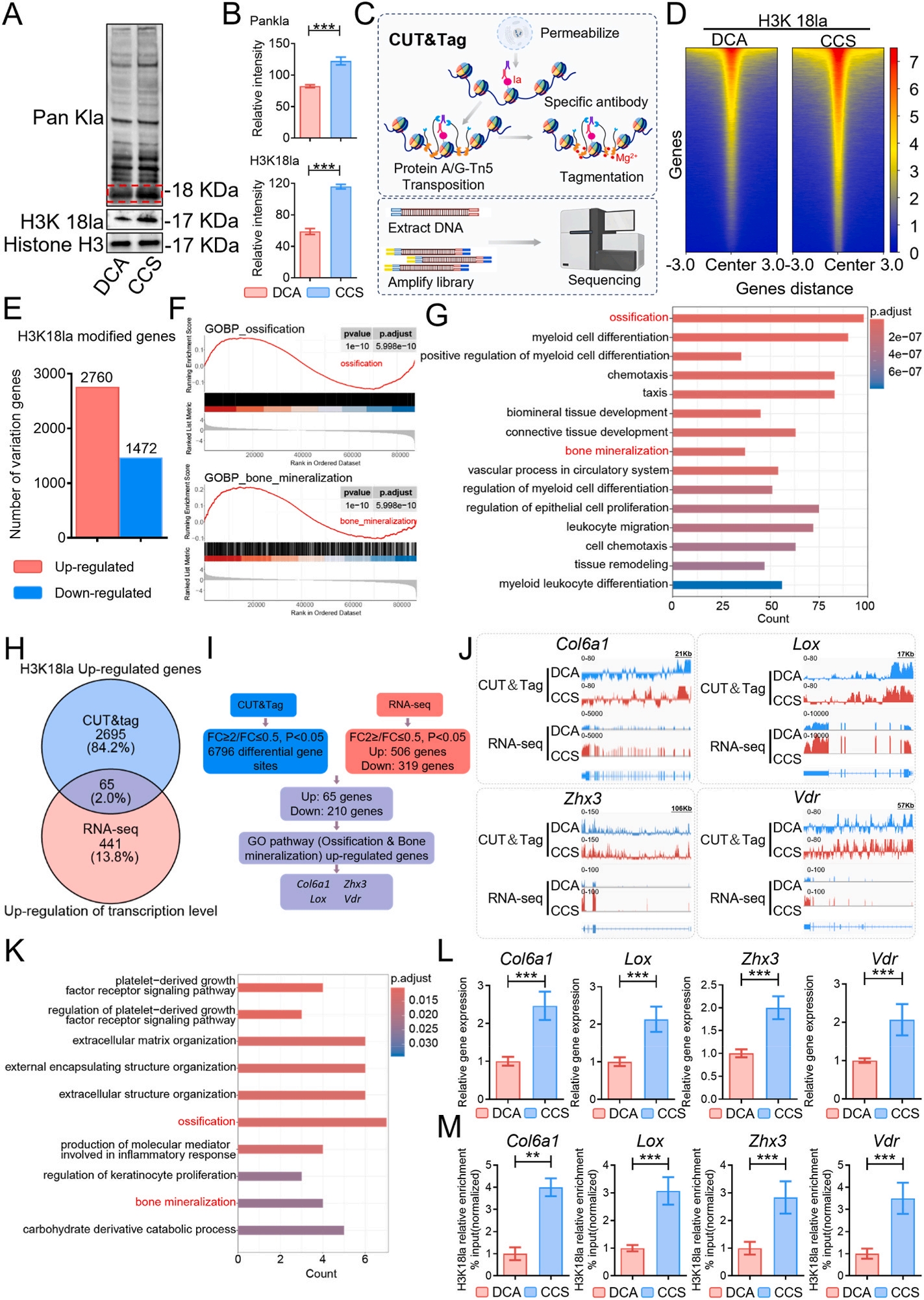
(3) Main Content: Single-cell sequencing shows enhanced glycolysis in chondrocytes, which serve as a major lactate source. Lactate enters tendon-derived mesenchymal stem cells via MCT1 and promotes P300-mediated H3K18la, activating osteogenesis-related genes including Col6a1, Zhx3, Lox, and Vdr. A biomimetic hydrogel containing A485@Exos was designed with a tendon-adhesive side and an anti-adhesive side for sustained local release and homotypic delivery.
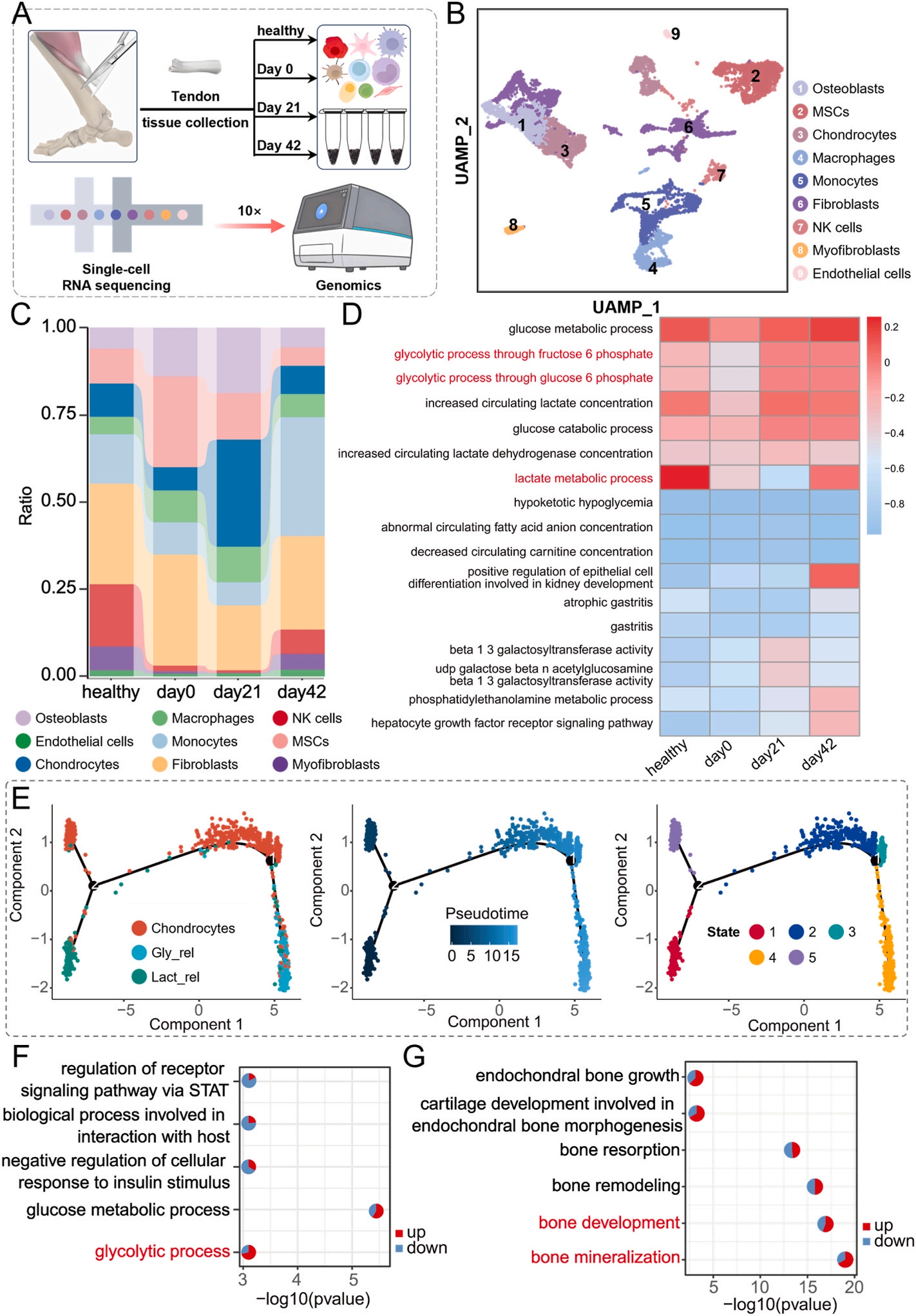
(4) Study Design: Single-cell transcriptomics, CUT&Tag, RNA-seq, ChIP-qPCR, Western blot, molecular docking, and cell osteogenesis assays were combined. A mouse Achilles tendon injury heterotopic ossification model was established, with micro-CT, histology, immunofluorescence, biomechanics, gait, and biocompatibility analyses, comparing blank, hydrogel-only, free A485, and different delivery groups.
(5) Results: GelHA-A485@Exos reduced H3K18la levels and downstream osteogenic gene expression in MSCs, inhibiting alkaline phosphatase activity and mineralization. In vivo, it reduced heterotopic bone formation, improved tendon morphology, mechanical strength, and functional recovery, with good biocompatibility and controlled degradation. Mechanistically, exosome delivery enhanced the targeting of A485 to MSCs.
(6) Future Directions: Further work should distinguish the relative contributions of P300 versus CBP and H3K18la versus H3K18ac, optimize exosome scalability and release kinetics, validate findings in models closer to physiological loading and complex inflammatory states, and explore other metabolic–epigenetic axes in aberrant tissue repair.
We provide full-process services for various material designs (including highly innovative scheme design, preparation, characterization, in vitro and in vivo validation (cell/animal experiments), etc.): a postdoctoral team (with multiple high-impact publications in Zone 1 journals) can meet all kinds of tricky and challenging requirements, including hydrogels / drug delivery / nanomaterials / polymers / liposomes / microneedle drug delivery, etc. We can assist with project design / NSFC grant applications / publication of high-impact Zone 1 and Zone 2 papers in journals such as AFM, SCI, AM, etc. Welcome to consult 👇️
17768014569 (Senior Engineer Gao)
17761925168 (Engineer Zhang)
18013729810 (Engineer Yang)
18915694570
Previous: Custom Nanomaterial Se
Next: Daily Tendon–Bone Inte


