

Knee Pain After Weight Loss: Understanding Obesity Memory 🦵
🦵 Many people still suffer from knee discomfort even after losing weight😭
Beyond simple joint wear‑and‑tear, obesity‑induced residual memory offers an intriguing research perspective📚
📑 Key viewpoints from this high‑impact review👇
Obesity affects the knee joint on two major dimensions⚡
🔹 【Adipose quantity | Mechanical aspect】 When body weight rises📈, the knee bears greater pressure. Cartilage and menisci are subjected to persistent mechanical stress, placing structural strain on the joint.
🔹 【Adipose quality | Metabolic aspect】 Changes occur in visceral fat plus infrapatellar fat pad, releasing a variety of adipokines and driving local immune responses😮
📌 Research note: metabolic effects tend to become more pronounced when combined with mechanical loading.
💡 Intriguing concept: “obesity‑induced residual memory”🧠 Even when body weight and BMI return to ideal ranges:
▪️ Epigenetic alterations within adipose tissue
▪️ Reprogramming of immune cells ▪️ Persistent local immune status in the infrapatellar fat pad
These observed phenomena may still exert potential impacts on joints. This provides one hypothetical explanation for persistent knee discomfort in some individuals after weight loss.
✨ Two‑pronged research strategy proposed in the paper📌
✔️ Implement weight management to reduce mechanical stress on joints
✔️ Pay attention to adipose tissue status and explore approaches to ameliorate obesity‑induced residual bodily changes
🔔 Note: Most corresponding interventions remain at the research stage and are not yet ready for real‑world routine use.
Meanwhile, studies suggest that weight management should be emphasized from early life👶.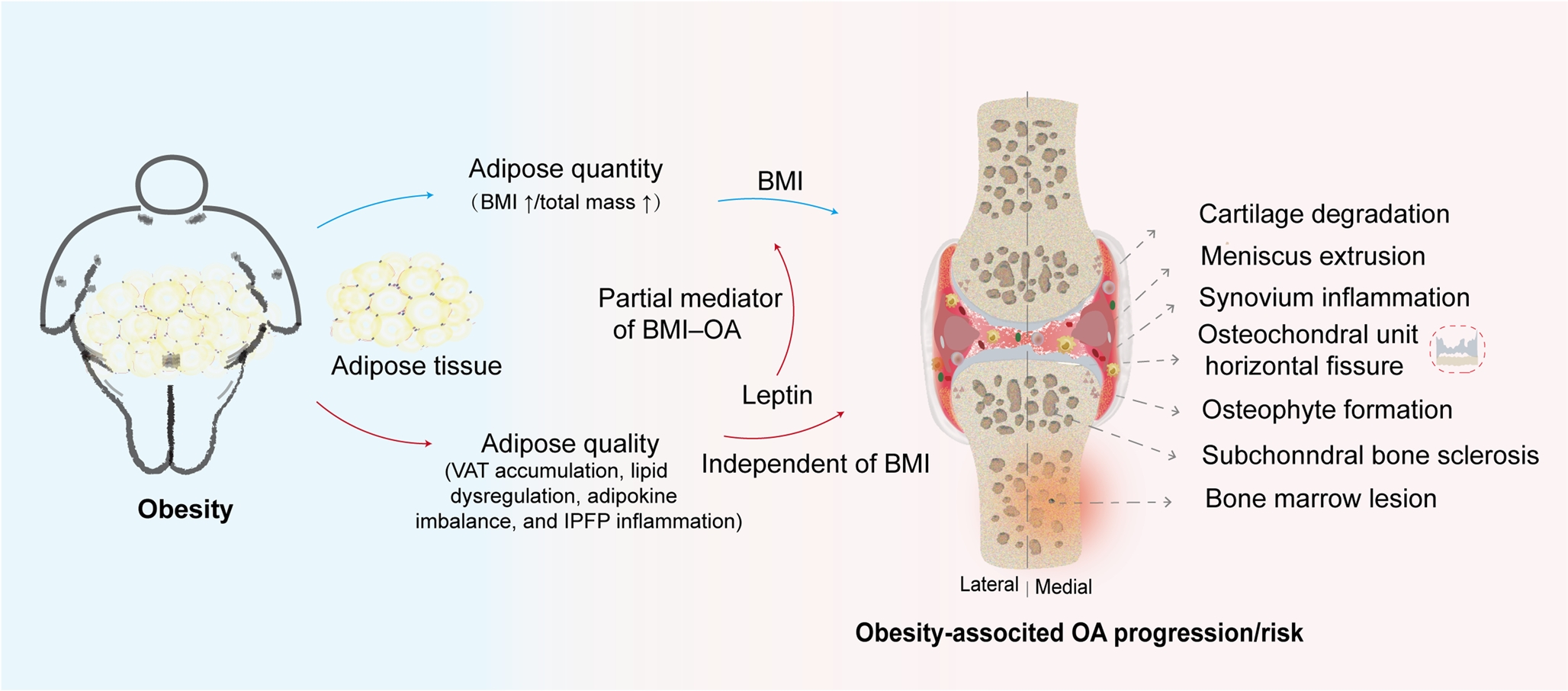
18915694570
Previous: BK Oncolytic virus pla
Next: Atomic-level Regulatio


