

Nanomaterial Customization Service | *Bioactive Materials*: Targeted Hydrogel Modulates Fibroblast Metabolism for Cardioprotection

Research Origin
Following myocardial infarction, cardiac fibroblasts are activated and transdifferentiate into myofibroblasts, depositing large amounts of collagen and driving ventricular stiffness and subsequent heart failure. This transformation is accompanied by metabolic reprogramming with significantly elevated glycolysis, which provides energy for cell proliferation and matrix secretion. Gastrodin can inhibit glycolysis and exert anti‑fibrotic effects. Nevertheless, it has a short half‑life, poor accumulation at lesion sites, and no selectivity for activated fibroblasts. Oral or systemic administration can hardly reach therapeutically effective concentrations in cardiac tissue. What is lacking is not the bioactive molecule, but a carrier capable of precisely delivering gastrodin to activated fibroblasts with controlled‑release performance.
Research Implementation Route
The authors prepared gastrodin‑loaded nanoparticles cloaked with chimeric antigen receptor‑T (CAR‑T) cell membranes that recognize FAP highly expressed on the surface of activated fibroblasts. The nanoparticles were further incorporated into phenylboronic acid‑modified citrate‑based hydrogel for pericardial cavity injection. Low‑pH and high‑ROS conditions at lesion sites cleave boronate ester bonds to release gastrodin on demand. It suppresses the KLF2/CREB5/HIF‑1α/PFKFB3 axis, down‑regulates glycolysis, and blocks fibroblast activation. The targeting focuses on FAP‑positive myofibroblasts and glycolytic metabolism.
Literature Commentary
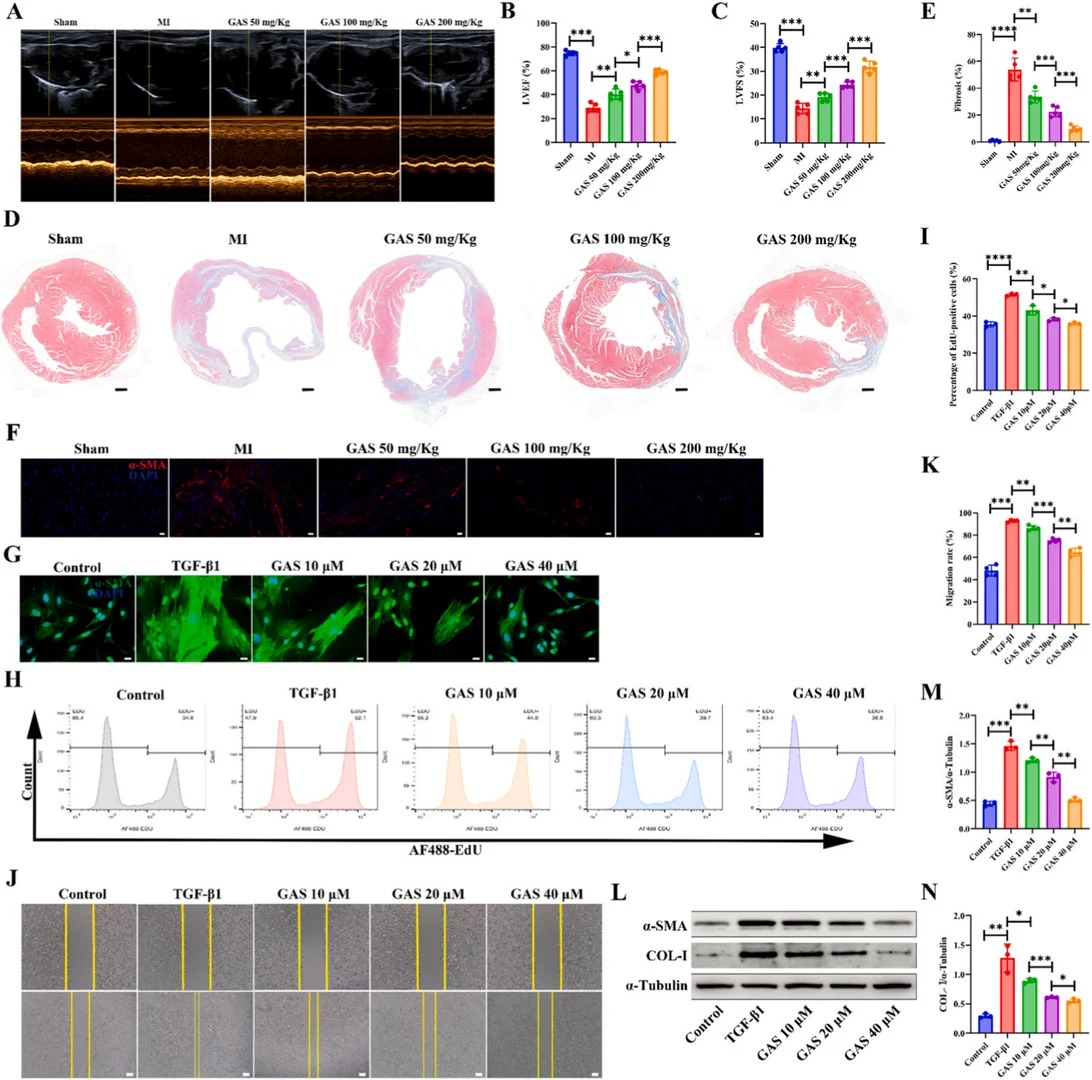
This study employs CAR‑T cell membranes as targeting moieties instead of viable CAR‑T cells, circumventing cell preparation‑related hurdles and toxicity concerns, representing an ingenious design. The combination of FAP‑mediated recognition and pH/ROS dual‑responsive release achieves both spatial and temporal regulation. Mechanistically, the work centers on the KLF2/CREB5/HIF‑1α/PFKFB3 metabolic axis, supported by mutual corroboration of in‑vitro ECAR assays, protein detection and in‑vivo immunofluorescence. Improved cardiac function and reduced fibrotic area are observed. Limitations include mouse‑only models with a 28‑day observation window; pharmacokinetics and long‑term degradation behaviour are not characterized, and the operability of pericardial cavity injection remains to be validated. Overall, it offers valuable inspiration for metabolic‑based intervention against cardiac fibrosis.
We provide full-process services for custom material design, including innovative scheme design, fabrication, characterization, and in vitro & in vivo validation (cell and animal studies). Our postdoctoral team with multiple high-impact Q1 publications can tackle your challenging research demands. Our scope covers hydrogels, drug delivery systems, nanomaterials, polymers, liposomes, microneedles and more. We support project design, NSFC proposal writing, and high-quality SCI manuscripts for journals such as AFM, AM and other Q1/Q2 journals. Enquiries are welcome
17768014569 (Dr.Gao)
17761925168 (Dr. Zhang)
18013729810 (Dr. Yang)
18915694570
Previous: Nano‑material Cu
Next: Custom Nanomaterial Se


