

Defect-engineered multiferroic catalysts and osteomyelitis microenvironment regulation
The treatment of chronic deep tissue infections (such as osteomyelitis) is hampered by the barrier effect of dense biofilms and the poor penetrability of conventional drugs. This paper investigates cascade-responsive therapy using defect-engineered multiferroic catalytic materials combined with physical fields (microwave/ultrasound). Through multi-physical-field energy conversion and spatiotemporally decoupled delivery of bioactive substances, the strategy aims to eliminate the infectious microenvironment and facilitate tissue repair.
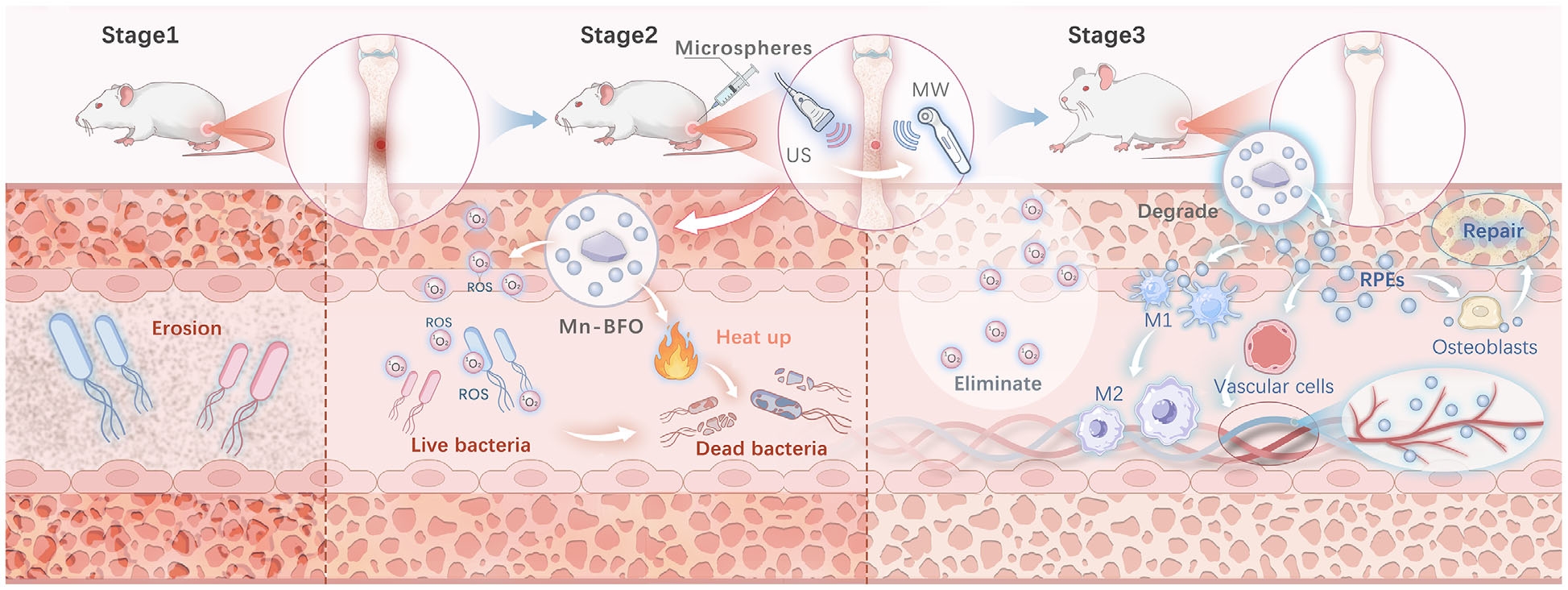
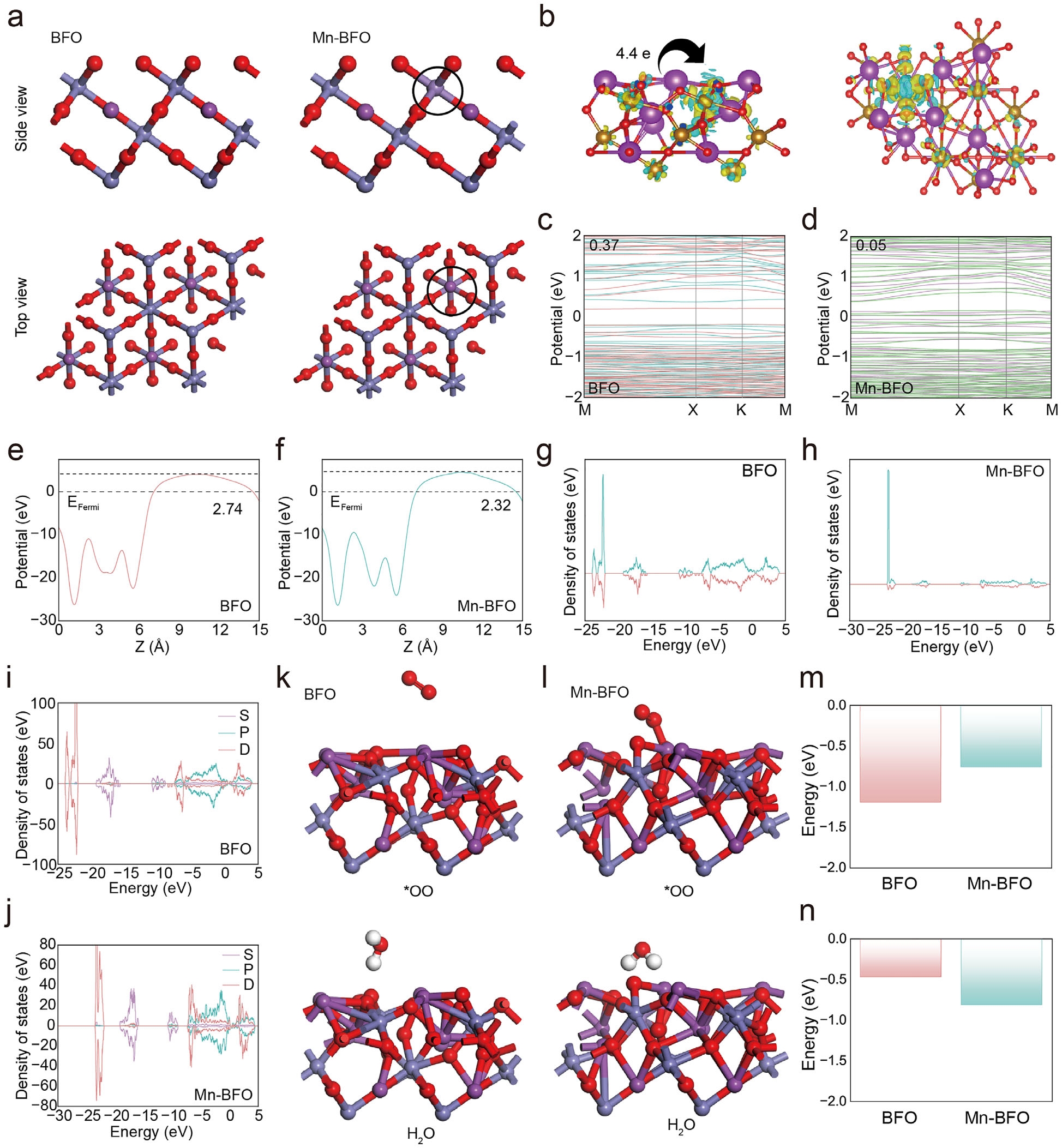
Defect-engineered multiferroic nanocatalysts are adopted for microwave‑ultrasound cascade catalytic therapy. The catalyst is based on manganese-doped bismuth ferrite (Mn-BFO) nanomaterials. Density functional theory calculations verify that defect dipoles introduced by Mn doping modulate the electronic structure of the material, suppress leakage current, and strengthen dielectric loss and piezoelectric response. Under microwave irradiation, the material generates localized hyperthermia to lower the catalytic energy barrier; subsequent ultrasound stimulation triggers its built-in piezoelectric electric field to boost charge separation, producing highly reactive reactive oxygen species (ROS) at the infection site to disrupt deep-seated biofilms via physicochemical mechanisms.
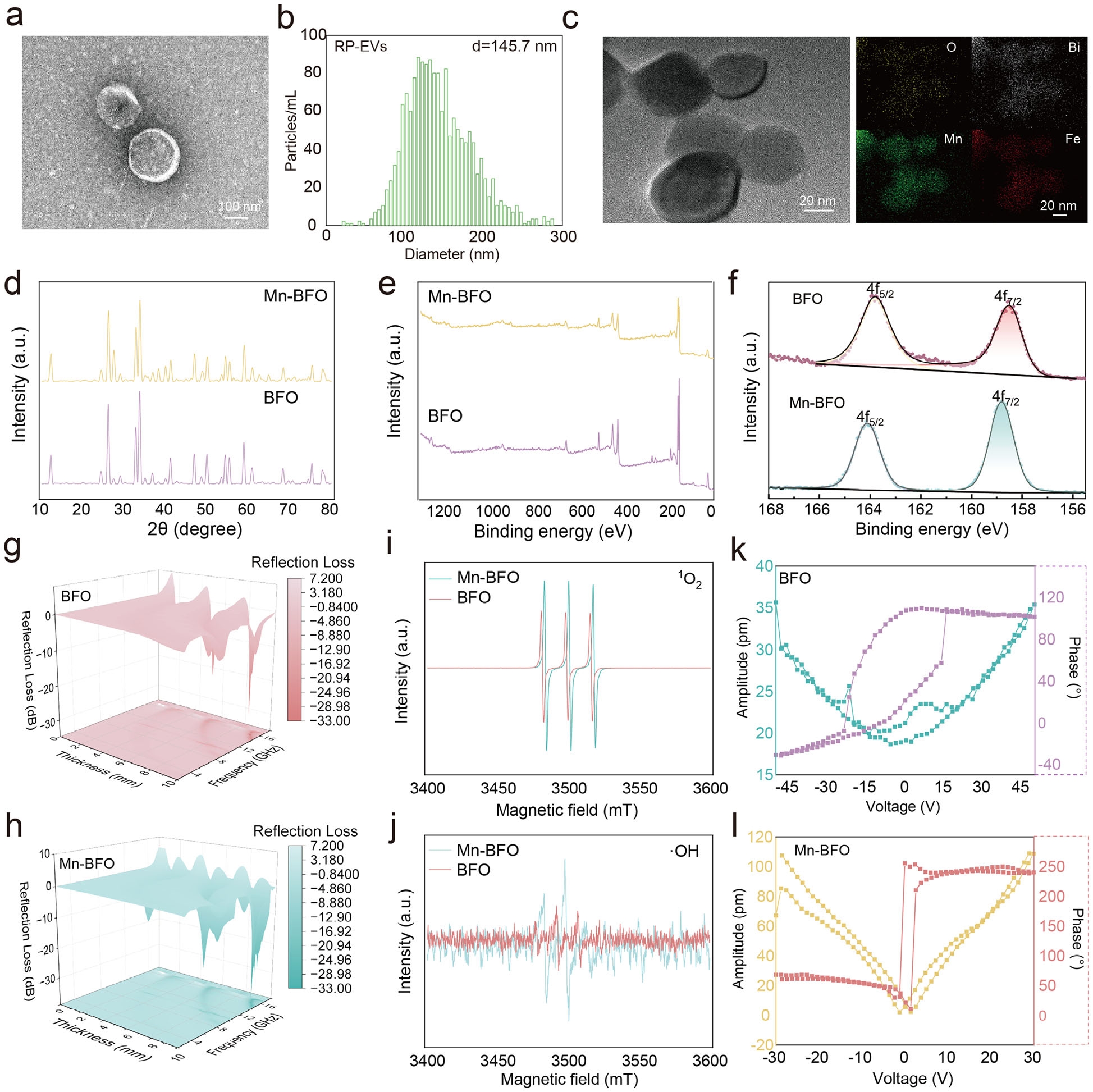
Plant-derived extracellular vesicles are used to remodel the immune microenvironment and promote osteogenesis. These vesicles, extracted from the traditional medicinal plant Rehmannia glutinosa (RP-EVs), are rich in regulatory miRNAs, lipids and small-molecule metabolites. After pathogens are eradicated by the physical field, the hydrogel microspheres degrade and release these vesicles. Relying on their inherent bioactivity, the vesicles drive macrophage polarization toward the anti-inflammatory M2 phenotype and activate osteogenic signaling pathways to accelerate osteogenic differentiation of bone marrow mesenchymal stem cells.
Injectable hydrogel microspheres enable spatiotemporally decoupled programmable delivery. The composite microspheres consist of a calcium alginate network co-encapsulating Mn-BFO nanocatalysts and RP-EVs. Their porous structure not only facilitates the release of loaded agents but also serves as a physical-field-responsive catalytic center in the early stage of treatment. After pathogen clearance, the vesicles are further released to modulate local immunity, thereby sequentially resolving the physiological antagonism between intense oxidative stress and tissue regeneration.
We provide comprehensive services covering the entire workflow of various material designs, including highly innovative scheme design, preparation, characterization, and in vitro & in vivo validation (cell/animal experiments). Our postdoctoral team, with multiple high-impact Q1 publications, can tackle your most challenging and complex requirements. Our scope includes hydrogels, drug delivery, nanomaterials, polymers, liposomes, microneedle drug delivery, and more. We support project design, National Natural Science Foundation of China application assistance, and publication of high-impact Q1/Q2 papers such as in AFM, SCI, and AM. Feel free to reach out👇️
17768014569 (Senior Engineer)
17761925168 (Engineer Zhang)
18013729810 (Engineer Yang)
18915694570
Previous: BK Oncolytic virus pla
Next: Atomic-level Regulatio


