

Daily Bone Infection Idea: Multiferroic Catalysis with Microwave and Ultrasound
(1) Abstract:
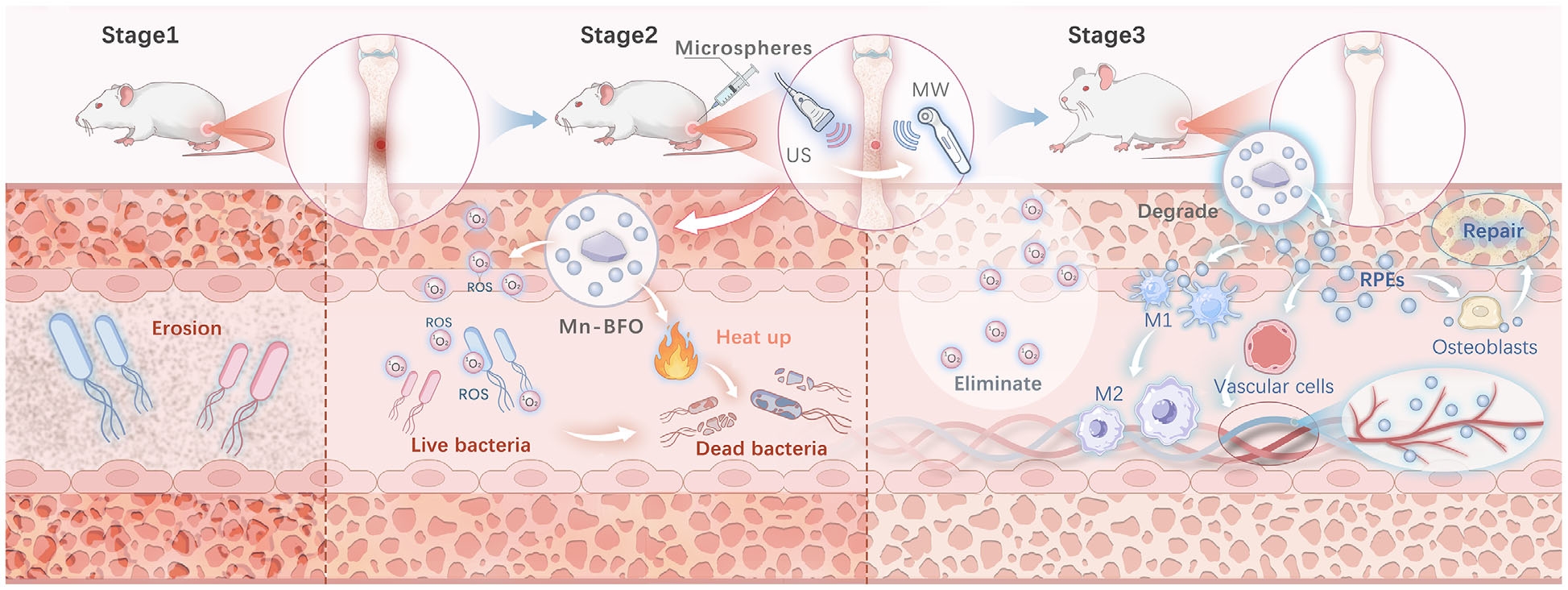
This study constructs a defect-engineered multiferroic catalytic platform, co-loading Mn-doped bismuth ferrite nanocatalysts and RP-derived extracellular vesicles in injectable hydrogel microspheres. Sequential microwave and ultrasound stimulation triggers cascade thermo-piezocatalytic conversion, generating localized heat and reactive oxygen species for antibacterial action, immunomodulation, and bone repair in chronic osteomyelitis.
(2) Background:
Chronic osteomyelitis involves deep-seated biofilms and anatomical barriers that restrict antibiotics and immune cells. Single microwave hyperthermia has limited spatial precision, and single ultrasound piezocatalysis suffers rapid charge recombination and insufficient energy coupling. A multi-physics coupling platform is needed to coordinate bacterial eradication and tissue regeneration.
(3) Main Content:
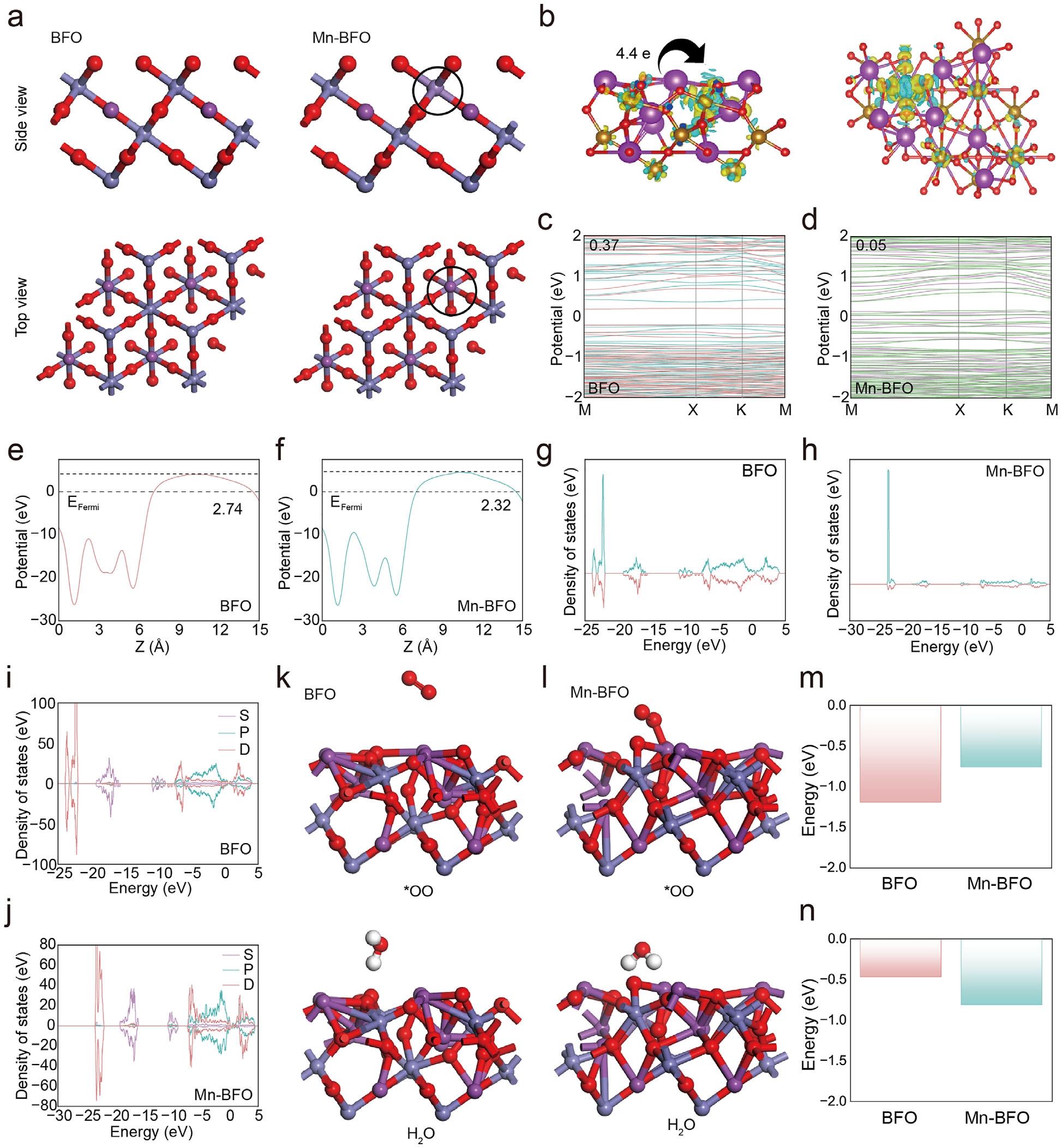
Mn doping induces defect dipoles, modulates the BiFeO3 electronic structure, suppresses leakage current, and enhances dielectric loss and piezoelectric response. Microwave irradiation generates localized heating to lower catalytic barriers; ultrasound promotes piezoelectric charge separation and reactive oxygen species generation, synergistically disrupting deep biofilms. Hydrogel degradation releases RP-EVs to promote M2 macrophage polarization and osteogenesis. Theoretical calculations analyze band structure, work function, adsorption energies, and d-p hybridization.
(4) Study Design:
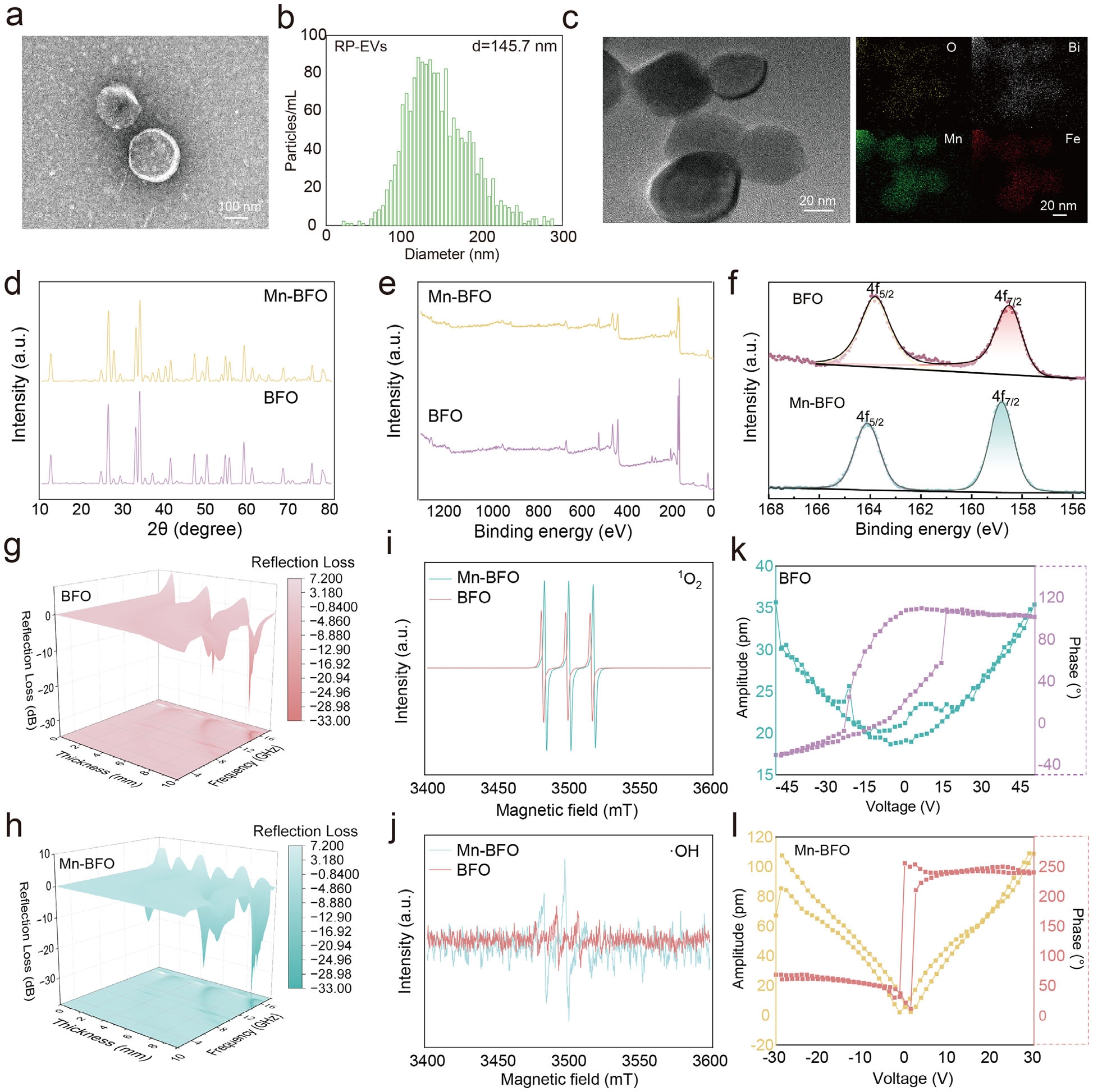
BFO and Mn-BFO were synthesized and characterized for morphology, phase, elemental distribution, XPS, ESR, microwave absorption, and piezoelectric response. RP-EVs were prepared and analyzed by multi-omics. RP/Mn-BFO hydrogel microspheres were fabricated. In vitro assays evaluated antibacterial activity, anti-biofilm effects, cytocompatibility, migration, and osteogenesis. A rat tibial osteomyelitis model was established, with micro-CT, histology, immunofluorescence, transcriptomics, and macrophage polarization analysis.
(5) Results:
Mn doping preserved the perovskite structure and introduced defect dipoles, enhancing microwave dielectric loss and piezoelectric response. Dual-field stimulation increased reactive oxygen species generation, enhanced antibacterial and anti-biofilm effects, and increased bacterial membrane disruption and protein leakage. The material showed good cytocompatibility and promoted osteogenic markers and mineralization. In vivo, it reduced infection and bone destruction, improved trabecular architecture, promoted M2 polarization and osteogenic protein expression, and suppressed NF-κB-related inflammatory pathways; hemolysis assays indicated good blood compatibility.
(6) Future Directions:
The defect types, quantitative relationships between dual-field energy coupling and reactive oxygen species generation, and the respective contributions of thermal effects, piezocatalysis, and immunomodulation need clarification. Long-term release, distribution, and safety of Bi/Mn should be evaluated, hydrogel degradation and vesicle release timing optimized, and validation performed in more complex bone infection models.
We provide full-process services for various material designs (including highly innovative scheme design, preparation, characterization, in vitro and in vivo validation (cell/animal experiments), etc.): a postdoctoral team (with multiple high-impact publications in Zone 1 journals) can meet all kinds of tricky and challenging requirements, including hydrogels / drug delivery / nanomaterials / polymers / liposomes / microneedle drug delivery, etc. We can assist with project design / NSFC grant applications / publication of high-impact Zone 1 and Zone 2 papers in journals such as AFM, SCI, AM, etc. Welcome to consult 👇️
17768014569 (Senior Engineer Gao)
17761925168 (Engineer Zhang)
18013729810 (Engineer Yang)
18915694570
Previous: Nanomaterial Customiza
Next: Custom Nanomaterial Se


