

Daily Tumor Immunology Idea | Targeting TAMs to Enhance Tumor Immunotherapy
(1) Abstract
This review summarizes the regulatory roles of tumor-associated macrophages (TAMs) in tumor immunotherapy. TAMs are a major cell population in the tumor microenvironment and are often associated with poor prognosis and therapy resistance. Focusing on immune checkpoint inhibition, tumor vaccines, and adoptive cell transfer, the article outlines mechanisms by which TAMs influence immunotherapy responses and summarizes three strategies: TAM elimination, inhibition of monocyte recruitment, and TAM reprogramming. The authors suggest that deeper understanding of TAM heterogeneity and their interactions with immune cells will help optimize existing immunotherapies and develop combination strategies.
(2) Background
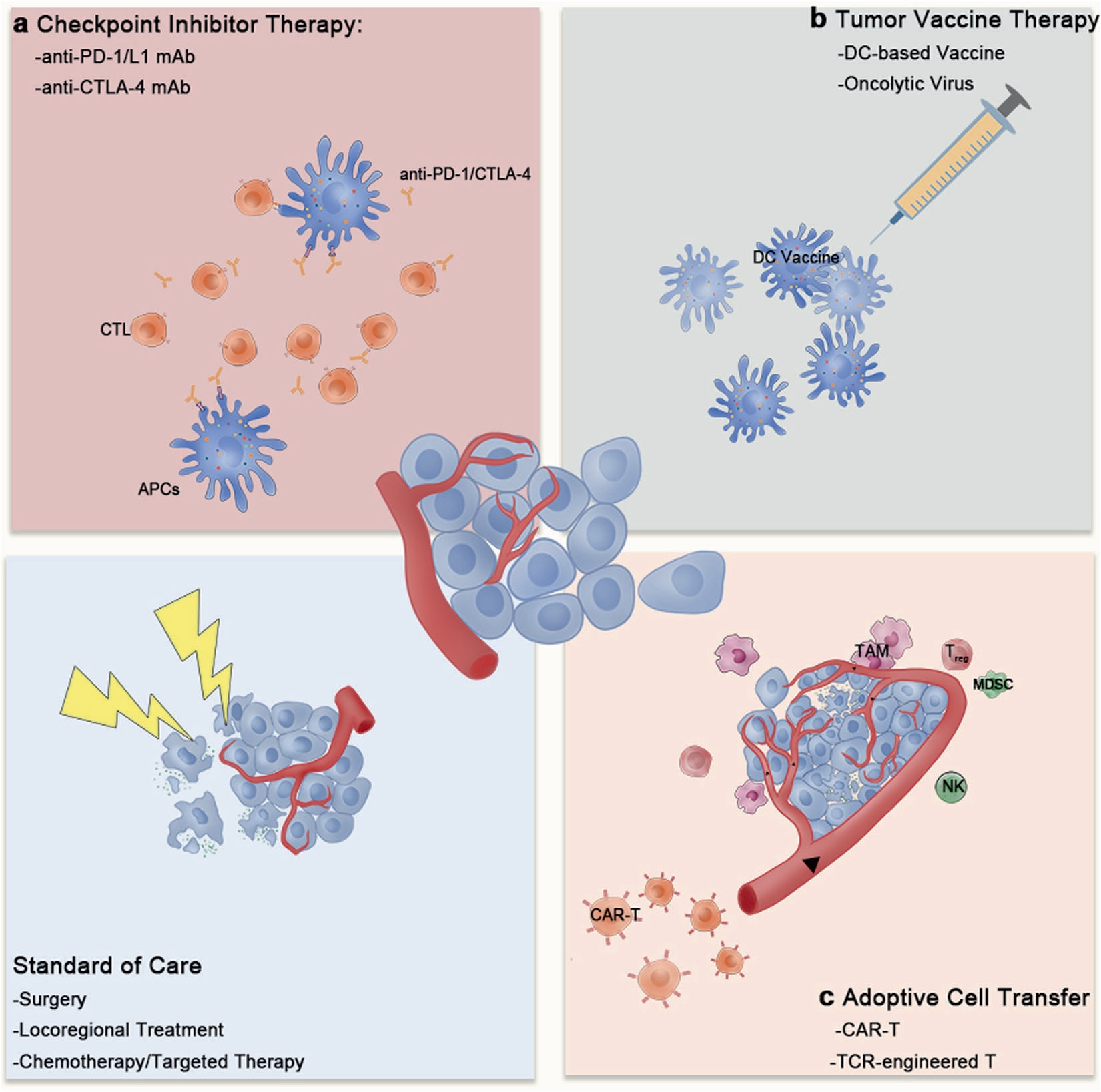
Treatment of advanced malignancies remains limited. Although immunotherapy has raised hope, responses are limited and vary considerably among individuals. Immunosuppression in the tumor microenvironment is a key barrier to efficacy. In addition to cytotoxic T lymphocytes and natural killer cells, the microenvironment contains cancer-associated fibroblasts, endothelial cells, and TAMs. High TAM infiltration is often associated with poor prognosis and resistance to radiotherapy, chemotherapy, targeted therapy, and immunotherapy. The traditional M1/M2 dichotomy is overly simplistic. TAM heterogeneity and dynamic changes are complex, requiring deeper analysis of their roles in immunotherapy.
(3) Main Content
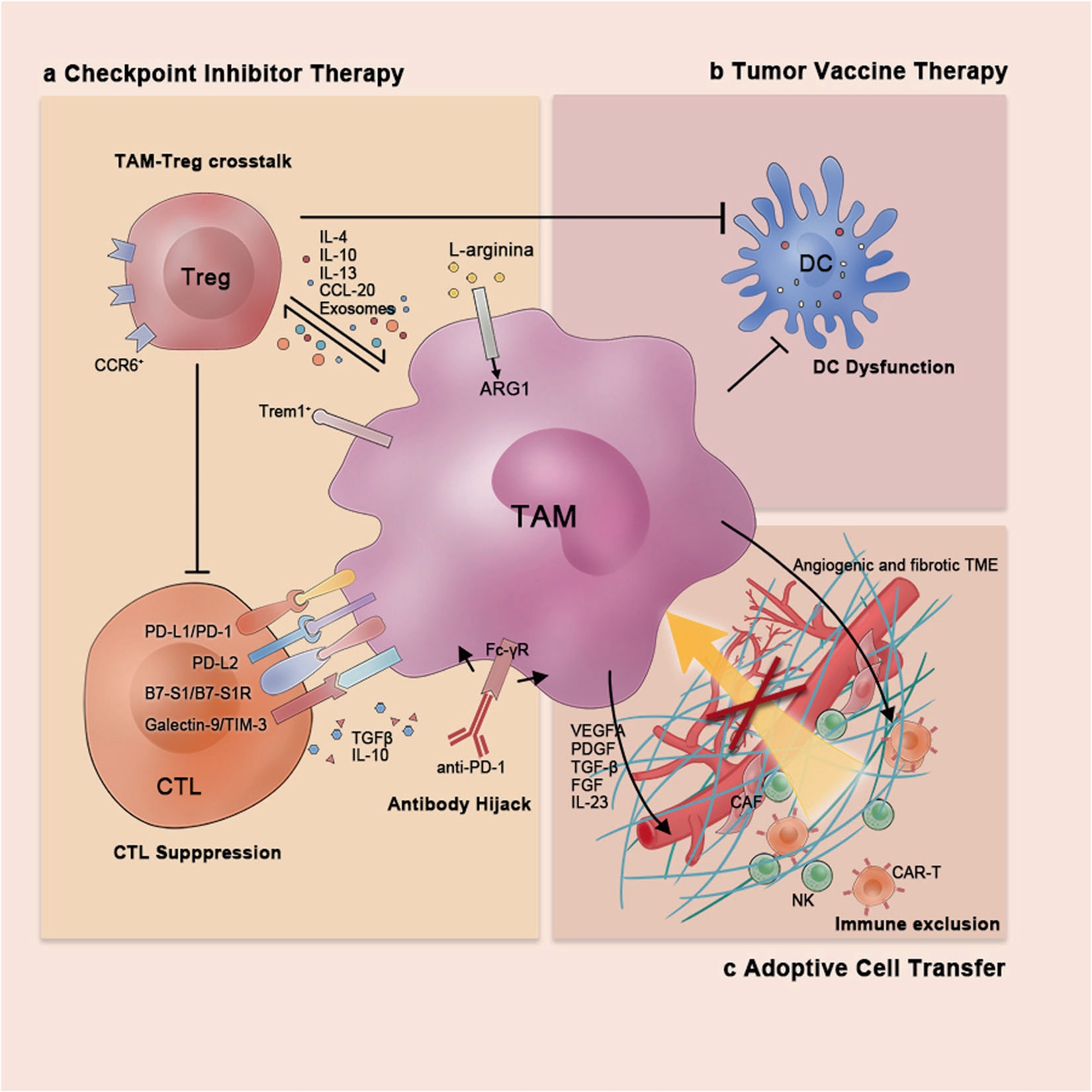
TAMs can promote tumor initiation, progression, angiogenesis, and metastasis. Through growth factors, cytokines, chemokines, and immunosuppressive molecules, they weaken T cell and natural killer cell functions and can recruit regulatory T cells. In checkpoint therapy, TAMs express checkpoint ligands such as PD-L1, interact with regulatory T cells, and may affect anti-PD-1 antibodies through FcγR binding. In adoptive cell transfer, TAMs promote angiogenesis and fibrosis, hindering immune cell infiltration. In tumor vaccines, TAMs inhibit dendritic cell antigen presentation, leading to therapy resistance.
(4) Study Design
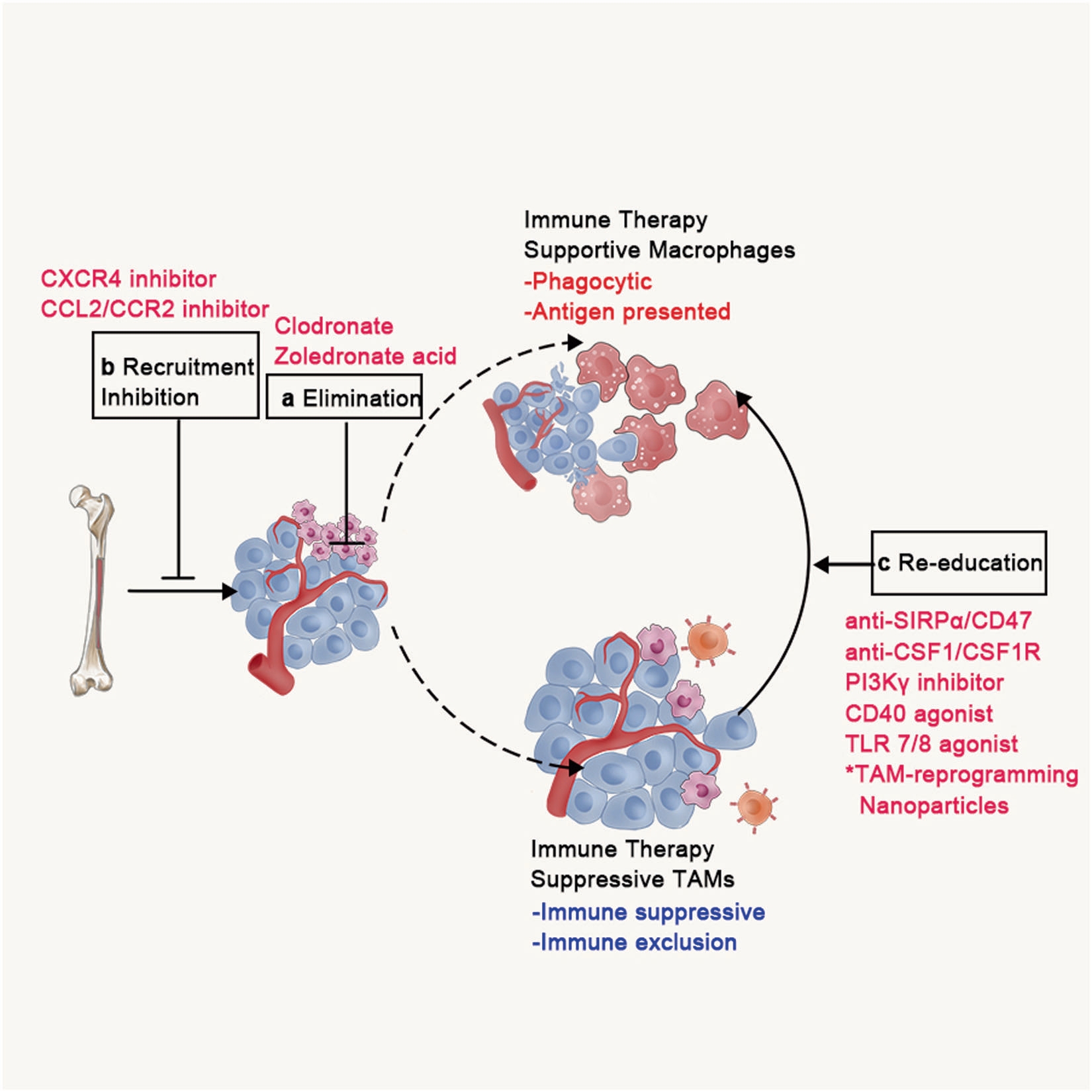
This is a review and does not involve original experimental design. The authors integrate basic studies, animal models, and early-stage evidence, analyze TAM regulatory functions according to different immunotherapy types, and classify targeting strategies into three categories: direct elimination of existing TAMs, inhibition of monocyte recruitment, and reprogramming TAMs toward an immune-supportive phenotype. The article further discusses mechanisms and limitations of bisphosphonates, CCL2/CCR2 and CXCL12/CXCR4 inhibition, CSF1R inhibitors, CD40 agonists, PI3Kγ inhibition, and nanomedicines.
(5) Results
The review shows that TAMs can weaken immunotherapy through checkpoint ligands, immunosuppressive factors, and interactions with regulatory T cells. Elimination strategies reduce TAMs but lack specificity and may damage tissue-resident macrophages. Recruitment inhibition can target CCL2/CCR2, CXCL12/CXCR4, and related signals, but may be compensated by neutrophils or rebound after withdrawal. Reprogramming strategies restore phagocytosis by blocking CD47-SIRPa, or enhance antigen presentation and immune stimulation through CSF1R, CD40, PI3Kγ, TLR agonists, and nanoparticles, thereby improving checkpoint inhibition, vaccines, and adoptive cell transfer.
(6) Perspectives
Future studies should further analyze TAM heterogeneity, metabolic reprogramming, and dynamic changes across different immunotherapy stages, and clarify the significance of new checkpoints such as TIGIT, VISTA, and LAG3 on macrophages. Gut microbiota-macrophage interactions may also affect immunotherapy responses. Nanomedicines have potential for targeting M2-like TAMs, controlled release, and remodeling the microenvironment, but their efficiency, safety, and tolerability still require evaluation. Combination strategies should balance relief of immunosuppression with restoration of immune stimulation, avoiding homeostatic disruption caused by simple depletion.
We provide full-process services for various material designs (including highly innovative scheme design, preparation, characterization, in vitro and in vivo validation (cell/animal experiments), etc.): a postdoctoral team (with multiple high-impact publications in Zone 1 journals) can meet all kinds of tricky and challenging requirements, including hydrogels / drug delivery / nanomaterials / polymers / liposomes / microneedle drug delivery, etc. We can assist with project design / NSFC grant applications / publication of high-impact Zone 1 and Zone 2 papers in journals such as AFM, SCI, AM, etc. Welcome to consult 👇️
17768014569 (Senior Engineer Gao)
17761925168 (Engineer Zhang)
18013729810 (Engineer Yang)
18915694570


